Precision Health Co., Ltd.
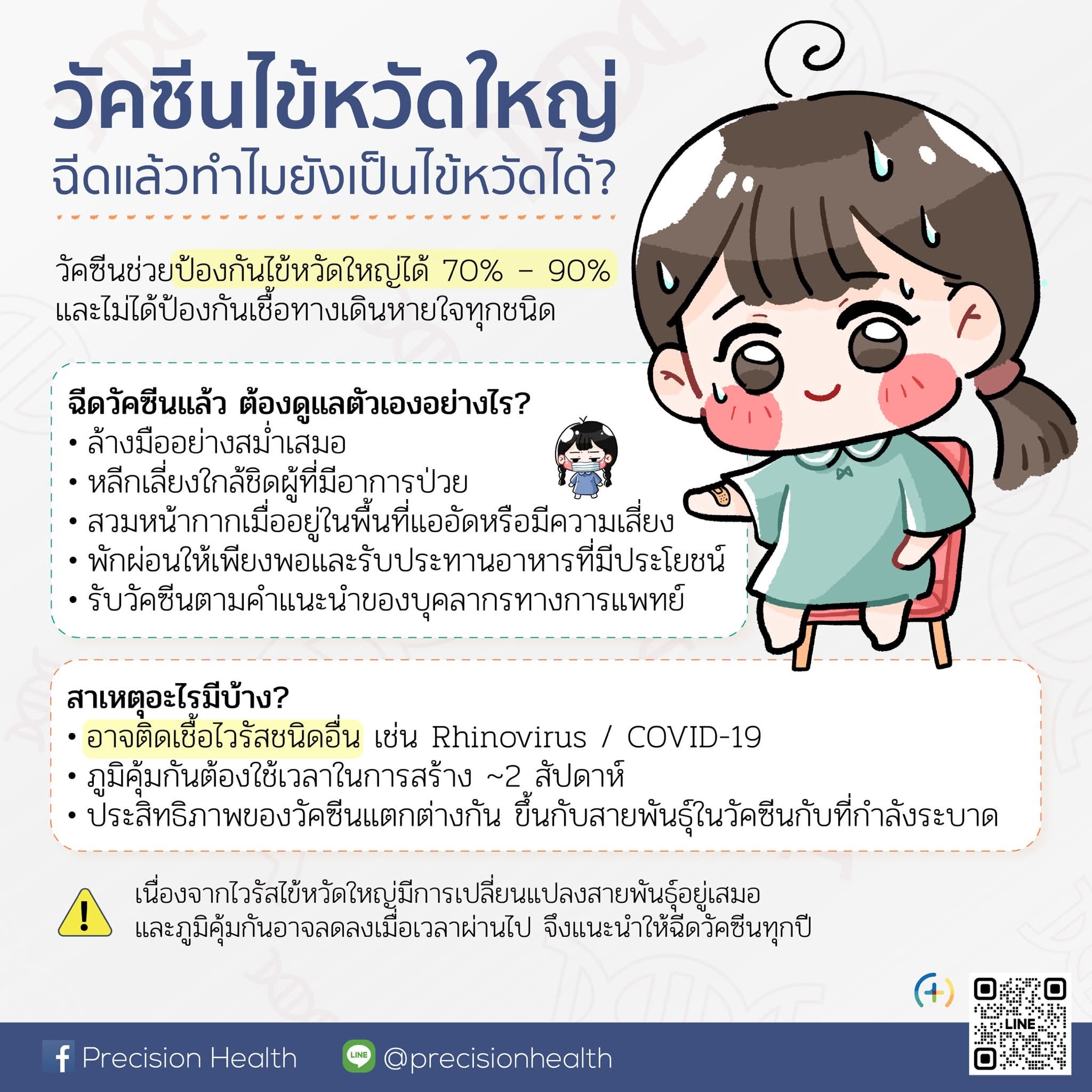
วัคซีนไข้หวัดใหญ่ ฉีดแล้วทำไมยังเป็นไข้หวัดได้?
เคยสงสัยไหมว่า ทำไมฉีดวัคซีนไข้หวัดใหญ่แล้ว แต่ยังมีอาการไอ จาม น้ำมูกไหล หรือเป็นไข้ได้อยู่?
ความจริงคือ วัคซีนไข้หวัดใหญ่ไม่ได้ป้องกันการเจ็บป่วยจากเชื้อทางเดินหายใจทุกชนิด และไม่ได้ป้องกันไข้หวัดใหญ่ได้ 100% แต่ช่วยป้องกันได้ 70% – 90% หลังฉีดวัคซีนไข้หวัดใหญ่ หลังฉีดวัคซีน ร่างกายต้องใช้เวลาประมาณ 2 สัปดาห์ในการสร้างภูมิคุ้มกันให้เพียงพอต่อการป้องกันโรค ดังนั้นในช่วงนี้จึงยังมีโอกาสติดเชื้อได้ โดยวัคซีนช่วยลดความเสี่ยงในการป่วย และลดโอกาสเกิดอาการรุนแรงหรือภาวะแทรกซ้อนจากโรคไข้หวัดใหญ่ได้
สาเหตุอะไรมีบ้าง?
1. อาจติดเชื้อไวรัสชนิดอื่น
อาการหวัดอาจเกิดจากไวรัสหลายชนิด เช่น Rhinovirus หรือไวรัสที่ทำให้เกิด COVID-19 ซึ่งวัคซีนไข้หวัดใหญ่ไม่ได้ออกแบบมาเพื่อป้องกันเชื้อเหล่านี้
2. ภูมิคุ้มกันต้องใช้เวลาในการสร้าง
หลังฉีดวัคซีน ร่างกายต้องใช้เวลาประมาณ 2 สัปดาห์ในการสร้างภูมิคุ้มกัน ระหว่างนี้ยังมีโอกาสติดเชื้อได้
3. ประสิทธิภาพของวัคซีนแตกต่างกัน
ขึ้นอยู่กับความสอดคล้องระหว่างสายพันธุ์ไวรัสในวัคซีนกับสายพันธุ์ที่กำลังระบาด รวมถึงอายุและสุขภาพของแต่ละคน
4. วัคซีนช่วยลดความรุนแรงได้
แม้ยังมีโอกาสติดเชื้อ แต่การฉีดวัคซีนช่วยลดความเสี่ยงของการป่วยรุนแรงและภาวะแทรกซ้อนจากไข้หวัดใหญ่ได้
ฉีดวัคซีนแล้ว ต้องดูแลตัวเองอย่างไร?
- ล้างมืออย่างสม่ำเสมอ
- หลีกเลี่ยงใกล้ชิดผู้ที่มีอาการป่วย
- สวมหน้ากากเมื่ออยู่ในพื้นที่แออัดหรือมีความเสี่ยง
- พักผ่อนให้เพียงพอและรับประทานอาหารที่มีประโยชน์
- รับวัคซีนตามคำแนะนำของบุคลากรทางการแพทย์
ทำไมต้องฉีดวัคซีนทุกปี?
เนื่องจากไวรัสไข้หวัดใหญ่มีการเปลี่ยนแปลงสายพันธุ์อยู่เสมอ และภูมิคุ้มกันจากวัคซีนอาจลดลงเมื่อเวลาผ่านไป จึงแนะนำให้ฉีดวัคซีนเป็นประจำทุกปี เพื่อให้การป้องกันสอดคล้องกับสถานการณ์การระบาดในแต่ละฤดูกาล
ดังนั้น ฉีดวัคซีนไข้หวัดใหญ่แล้วก็ยังป่วยได้ แต่การฉีดวัคซีนยังมีประโยชน์ในการลดความเสี่ยงของโรครุนแรง อย่าลืมดูแลสุขภาพควบคู่กันไปด้วยนะคะ หากมีอาการหายใจลำบาก เจ็บหน้าอก ซึมลง หรืออาการรุนแรง ควรรีบพบแพทย์ทันที
Why Can You Still Catch a Cold After Getting the Flu Vaccine?
Have you ever wondered why you can still experience coughing, sneezing, a runny nose, or fever even after receiving the influenza vaccine?
The truth is that the influenza vaccine does not protect against all respiratory infections, nor does it provide 100% protection against influenza. Its effectiveness can vary depending on several factors. After vaccination, the body needs approximately 2 weeks to develop sufficient immunity to help protect against the virus. Therefore, you may still be susceptible to infection during this period.
Although the vaccine cannot prevent every infection, it helps reduce the risk of influenza and lowers the likelihood of severe illness and complications.
What Are the Possible Reasons?
1. You may be infected with another type of virus:
Cold-like symptoms can be caused by various viruses, such as rhinoviruses or the virus that causes COVID-19. The influenza vaccine is not designed to protect against these viruses.
2. Your body needs time to build immunity: After vaccination, the body needs approximately 2 weeks to develop an immune response. During this period, you may still be susceptible to infection.
3. Vaccine effectiveness varies: The effectiveness of the vaccine depends on how well the virus strains included in the vaccine match those circulating in the community, as well as factors such as age and overall health.
4. The vaccine helps reduce the severity of illness: Even if you still become infected, vaccination can help reduce the risk of severe illness and complications caused by influenza.
How Should You Take Care of Yourself After Vaccination?
- Wash your hands regularly.
- Avoid close contact with people who are sick.
- Wear a face mask in crowded places or when exposed to higher-risk environments.
- Get enough rest and eat a balanced, nutritious diet.
- Follow healthcare professionals’ recommendations regarding vaccination.
Why Do You Need a Flu Vaccine Every Year?
Influenza viruses constantly change, and immunity from vaccination may decrease over time. Therefore, annual influenza vaccination is recommended to help ensure protection against the strains expected to circulate during each flu season.
In conclusion, you can still get sick after receiving the influenza vaccine. However, vaccination remains an important way to reduce the risk of severe illness and complications. Remember to take good care of your health alongside vaccination.
If you experience difficulty breathing, chest pain, confusion or decreased alertness, or other severe symptoms, seek medical attention immediately.
By adminph
Posted 2026-10-22 00:00:00