Precision Health Co., Ltd.
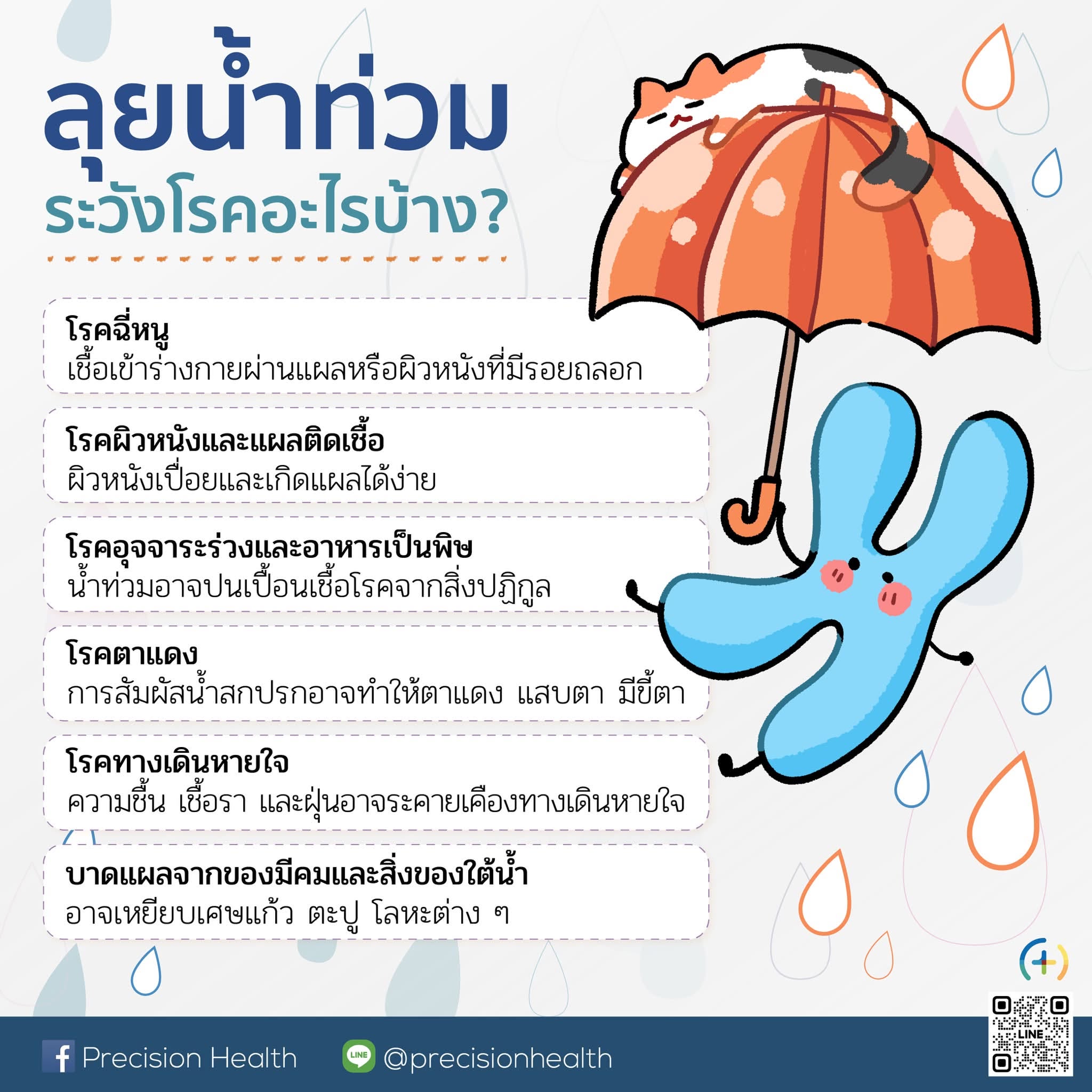
ลุยน้ำท่วม ระวังโรคอะไรบ้าง?
น้ำท่วมไม่ได้มีแค่ความเสี่ยงจากการจมน้ำ แต่ยังอาจปนเปื้อนเชื้อโรค สารเคมี และสิ่งสกปรกต่าง ๆ โดยเฉพาะเมื่อต้องเดินลุยน้ำเป็นเวลานาน
1. โรคฉี่หนู (Leptospirosis)
เกิดจากเชื้อแบคทีเรียที่ปนเปื้อนในน้ำหรือดิน โดยเชื้อสามารถเข้าสู่ร่างกายผ่านบาดแผลหรือผิวหนังที่มีรอยถลอก อาการที่พบได้ เช่น ไข้สูง ปวดศีรษะ ปวดเมื่อยกล้ามเนื้อ และตาแดง
2. โรคผิวหนังและแผลติดเชื้อ
การแช่น้ำเป็นเวลานานทำให้ผิวหนังเปื่อยและเกิดแผลได้ง่าย หากน้ำสกปรกสัมผัสบาดแผล อาจเพิ่มความเสี่ยงต่อการติดเชื้อ
3. โรคอุจจาระร่วงและอาหารเป็นพิษ
น้ำท่วมอาจปนเปื้อนเชื้อโรคจากสิ่งปฏิกูล หากรับประทานอาหารหรือน้ำที่ไม่สะอาด อาจทำให้เกิดอาการท้องเสีย อาเจียน หรือปวดท้อง
4. โรคตาแดง
การสัมผัสน้ำสกปรกอาจเพิ่มความเสี่ยงต่อการติดเชื้อบริเวณดวงตา ทำให้ตาแดง แสบตา หรือมีขี้ตา
5. โรคทางเดินหายใจ
หลังน้ำลด ความชื้น เชื้อรา และฝุ่นจากการทำความสะอาดบ้านอาจกระตุ้นอาการไอ จาม หรือระคายเคืองทางเดินหายใจ โดยเฉพาะในผู้ที่มีโรคทางเดินหายใจเดิม
6. บาดแผลจากของมีคมและสิ่งของใต้น้ำ
น้ำท่วมทำให้มองไม่เห็นพื้นด้านล่าง อาจเหยียบเศษแก้ว ตะปู หรือโลหะต่าง ๆ จนเกิดบาดแผลและการติดเชื้อได้
หลังลุยน้ำท่วมควรทำอย่างไร?
- รีบล้างตัวและเท้าด้วยน้ำสะอาดและสบู่
- ทำความสะอาดบาดแผลทันที
- หลีกเลี่ยงการรับประทานอาหารหรือน้ำที่อาจปนเปื้อน
- หากมี ไข้สูง ปวดศีรษะมาก ปวดเมื่อยผิดปกติ ตาแดง ท้องเสียรุนแรง หรือแผลบวมแดงมีหนอง ควรพบแพทย์ และแจ้งประวัติว่าเพิ่งสัมผัสน้ำท่วม
หลังลุยน้ำท่วม อย่าลืมดูแลสุขภาพและสังเกตอาการของตัวเอง หากมีอาการผิดปกติ ควรรีบพบแพทย์เพื่อรับการตรวจและรักษาอย่างเหมาะสมนะคะ
Wading Through Floodwater: What Diseases Should You Watch Out for?
Floodwater poses more than just a risk of drowning. It may also be contaminated with bacteria, chemicals, sewage, and other harmful substances. The risk can be higher when you have to walk through floodwater for an extended period of time.
1. Leptospirosis (Leptospira infection)
Leptospirosis is caused by bacteria that may be present in contaminated water or soil. The bacteria can enter the body through cuts, wounds, or abrasions on the skin. Common symptoms include high fever, headache, muscle aches, and red eyes.
2. Skin Infections and Infected Wounds
Prolonged exposure to water can cause the skin to become soft and more prone to cuts and wounds. Contact with contaminated floodwater may increase the risk of infection, especially when there are open wounds.
3. Diarrhea and Food Poisoning
Floodwater may be contaminated with bacteria and other pathogens from sewage and waste. Consuming contaminated food or water can cause diarrhea, vomiting, abdominal pain, and other gastrointestinal symptoms.
4. Conjunctivitis (Pink Eye)
Contact with contaminated water may increase the risk of eye infections, which can cause redness, irritation, burning, or discharge from the eyes.
5. Respiratory Illnesses
After the floodwater recedes, moisture, mold, and dust generated during cleaning may trigger coughing, sneezing, or respiratory irritation, particularly in people with pre-existing respiratory conditions.
6. Injuries from Sharp Objects and Debris Underwater
Floodwater can make it difficult to see what is beneath the surface. You may accidentally step on broken glass, nails, metal objects, or other debris, resulting in cuts and increasing the risk of infection.
What Should You Do After Wading Through Floodwater?
- Shower and wash your feet thoroughly with clean water and soap.
- Clean and disinfect any wounds as soon as possible.
- Avoid consuming food or drinking water that may have been contaminated.
- If you develop a high fever, severe headache, unusual muscle aches, red eyes, severe diarrhea, or wounds that become swollen, red, or produce pus, seek medical attention promptly.
- Tell your healthcare provider that you have recently been exposed to floodwater.
After wading through floodwater, don't forget to take care of your health and monitor yourself for any unusual symptoms. If you experience any concerning symptoms, seek medical attention promptly for appropriate evaluation and treatment.