Precision Health Co., Ltd.
น้ำหนักขึ้นง่าย…อาจไม่ได้เกิดจากกินเยอะอย่างเดียว
เคยสงสัยไหมว่า
“ทำไมช่วงนี้กินเท่าเดิม แต่อยู่ ๆ น้ำหนักก็ขึ้น?”
หรือบางคนพยายามควบคุมอาหารแล้ว แต่น้ำหนักกลับลดได้ยากกว่าที่คิด
จริง ๆ แล้วน้ำหนักตัวไม่ได้ขึ้นอยู่กับ “กินมากหรือน้อย” เพียงอย่างเดียว แต่เป็นผลจากหลายปัจจัย ทั้ง การใช้พลังงาน ฮอร์โมน การนอน ความเครียด อายุ พฤติกรรมการใช้ชีวิต ยาบางชนิด และภาวะสุขภาพบางอย่าง
1. นอนน้อย ทำให้อยากอาหารมากขึ้น
การนอนหลับไม่เพียงพอสามารถรบกวนระบบฮอร์โมนที่เกี่ยวข้องกับความหิวและความอิ่ม ทำให้รู้สึกหิวบ่อยขึ้น และมีแนวโน้มเลือกอาหารที่ให้พลังงานสูงมากขึ้น นอกจากนี้ คนที่นอนน้อยมักมีความเหนื่อยล้า ทำให้กิจกรรมทางกายลดลง ส่งผลให้ใช้พลังงานน้อยลงด้วย
2. ความเครียดอาจส่งผลต่อน้ำหนัก
เมื่อเกิดความเครียด ร่างกายจะมีการเปลี่ยนแปลงของฮอร์โมนและพฤติกรรมการกิน
บางคนอาจกินมากขึ้น โดยเฉพาะอาหารหวาน มัน หรืออาหารที่ให้พลังงานสูง ขณะที่บางคนอาจมีพฤติกรรมการกินที่ไม่เป็นเวลา หากเกิดขึ้นต่อเนื่อง ก็อาจมีส่วนทำให้น้ำหนักเพิ่มขึ้นได้
3. อายุเพิ่มขึ้น แต่กิจกรรมในชีวิตประจำวันลดลง
เมื่ออายุมากขึ้น มวลกล้ามเนื้อมีแนวโน้มลดลง หากไม่ได้ออกกำลังกายเพื่อรักษากล้ามเนื้อ
เมื่อกล้ามเนื้อลดลง ร่างกายอาจใช้พลังงานน้อยลง ประกอบกับการเคลื่อนไหวในชีวิตประจำวันลดลง จึงทำให้สมดุลพลังงานเปลี่ยนไป แม้จะรู้สึกว่า “กินเหมือนเดิม”
4. กินไม่เยอะ แต่ได้รับพลังงานมากกว่าที่คิด
อาหารบางชนิดมีปริมาณไม่มาก แต่ให้พลังงานสูง เช่น
- เครื่องดื่มที่มีน้ำตาล
- กาแฟหรือชานมที่เติมน้ำตาลและครีม
- ขนมและเบเกอรี่
- อาหารทอดและของว่าง
บางครั้งแคลอรีจากเครื่องดื่มหรือของกินเล่นระหว่างวันอาจสะสมโดยที่เราไม่รู้ตัว
5. การออกกำลังกายอย่างเดียวอาจไม่เพียงพอ
หลายคนเริ่มออกกำลังกายเพื่อควบคุมน้ำหนัก แต่ลืมว่าพลังงานที่ได้รับจากอาหารก็มีความสำคัญเช่นกัน
นอกจากนี้ หากออกกำลังกายแล้วเหนื่อยมากขึ้น แต่กิจกรรมอื่น ๆ ในชีวิตประจำวันลดลง เช่น เดินน้อยลง หรือนั่งมากขึ้น การใช้พลังงานรวมทั้งวันอาจไม่ได้เพิ่มขึ้นมากอย่างที่คิด
6. ยาบางชนิดอาจมีผลต่อน้ำหนัก
ยาบางกลุ่มสามารถเกี่ยวข้องกับน้ำหนักที่เพิ่มขึ้นได้ เช่น ยาบางชนิดที่ใช้รักษาโรคทางจิตเวช ยากันชัก สเตียรอยด์ หรือยาบางชนิดสำหรับโรคเบาหวาน
หากสังเกตว่าน้ำหนักเพิ่มขึ้นหลังเริ่มยา ไม่ควรหยุดยาเอง แต่ควรปรึกษาแพทย์เพื่อประเมินและหาทางเลือกที่เหมาะสม
7. ภาวะสุขภาพบางอย่างก็มีส่วนเกี่ยวข้อง
ในบางกรณี น้ำหนักที่เพิ่มขึ้นโดยไม่ทราบสาเหตุอาจเกี่ยวข้องกับภาวะสุขภาพบางอย่าง เช่น ภาวะไทรอยด์ทำงานต่ำ หรือภาวะอื่น ๆ ที่ส่งผลต่อการเผาผลาญและสมดุลของร่างกาย
หากมีน้ำหนักเพิ่มขึ้นอย่างต่อเนื่องหรือรวดเร็ว โดยเฉพาะเมื่อมีอาการอื่นร่วมด้วย เช่น เหนื่อยง่าย หนาวง่าย บวม หรือมีการเปลี่ยนแปลงของร่างกายที่ผิดปกติ ควรปรึกษาแพทย์
น้ำหนักขึ้น ไม่ได้แปลว่า “กินเยอะ” เสมอไป
การควบคุมน้ำหนักที่เหมาะสมจึงไม่ควรมองเพียงว่า
“ต้องกินให้น้อยลง”
แต่ควรพิจารณาให้ครบทั้ง
อาหาร + การนอน + ความเครียด + การเคลื่อนไหว + อายุ + ยาที่ใช้ + สุขภาพโดยรวม
และหากน้ำหนักเปลี่ยนแปลงโดยไม่ทราบสาเหตุ การประเมินสุขภาพอย่างเหมาะสมอาจช่วยให้ค้นหาปัจจัยที่เกี่ยวข้องได้ตรงจุดมากขึ้น
เพราะการดูแลน้ำหนักที่ดี ไม่ใช่การโทษตัวเอง แต่คือการเข้าใจร่างกายของตัวเองให้มากขึ้น
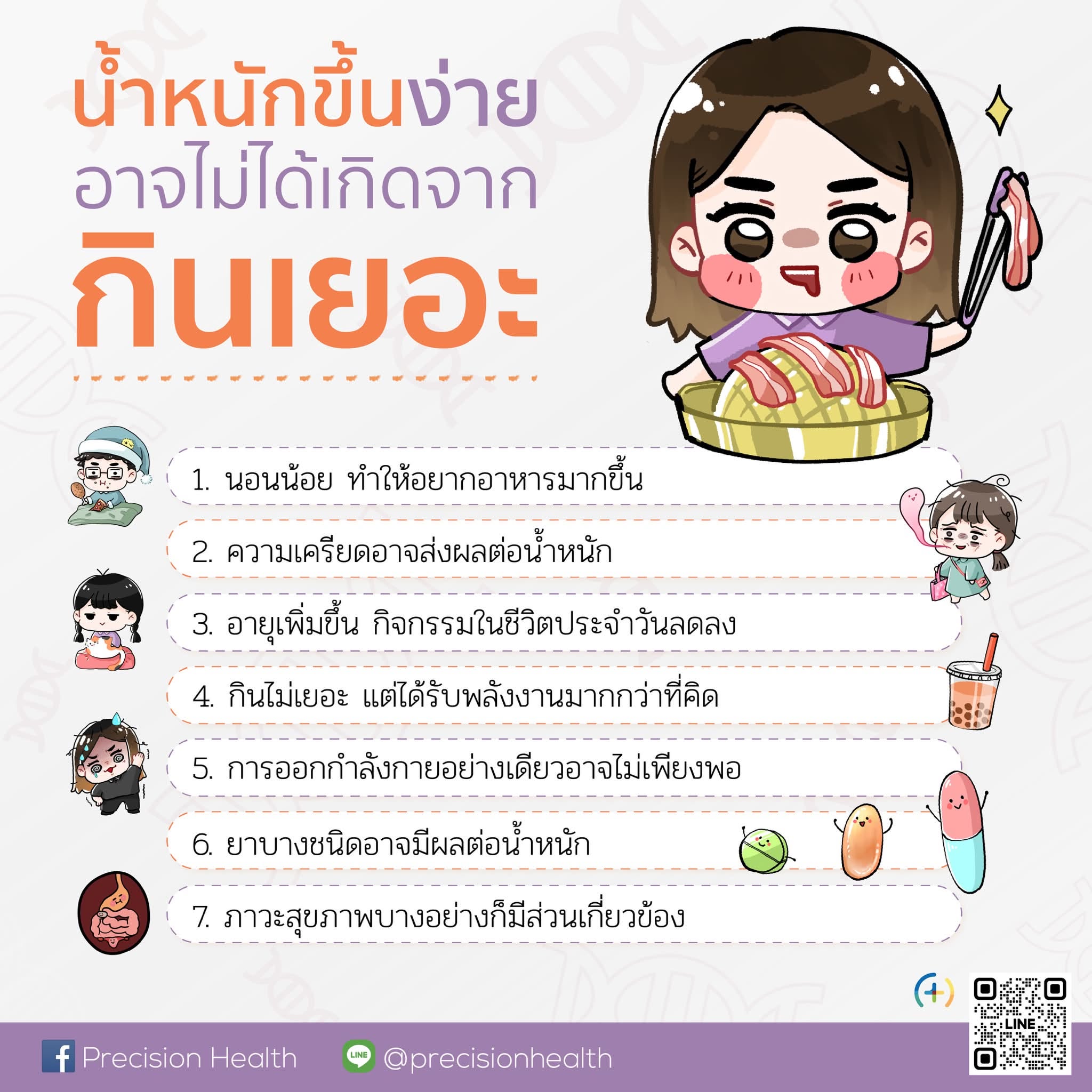
Gaining Weight Easily… It May Not Be Just About Eating Too Much
Have you ever wondered:
“Why have I suddenly gained weight even though I’m eating the same amount as usual?”
Or perhaps you’ve been trying to control your diet, but the weight seems harder to lose than expected.
In reality, body weight is influenced by much more than simply “how much you eat.” It can be affected by many factors, including energy expenditure, hormones, sleep, stress, age, lifestyle habits, certain medications, and underlying health conditions.
1. Not Getting Enough Sleep Can Increase Appetite
Insufficient sleep can disrupt hormones involved in hunger and fullness, making you feel hungrier and more likely to choose high-calorie foods.
Lack of sleep can also cause fatigue, which may reduce physical activity and lead to lower overall energy expenditure.
2. Stress Can Affect Your Weight
When you are under stress, changes in hormones and eating behaviors can occur.
Some people may eat more, particularly foods high in sugar, fat, or calories. Others may develop irregular eating habits.
If these patterns continue over time, they may contribute to weight gain.
3. Getting Older While Becoming Less Active
As we age, muscle mass tends to decrease, especially if we do not exercise to maintain it.
With less muscle mass, the body may use less energy. Combined with reduced daily movement, this can alter the balance between energy intake and expenditure—even when you feel like you are “eating the same as before.”
4. You May Not Eat a Lot, but Still Consume More Calories Than You Realize
Some foods and drinks may be small in portion but high in calories, such as:
- Sugar-sweetened beverages
- Coffee or milk tea with added sugar and cream
- Desserts and baked goods
- Fried foods and snacks
Calories from drinks and small snacks throughout the day can add up without you realizing it.
5. Exercise Alone May Not Be Enough
Many people start exercising to manage their weight but overlook the importance of energy intake from food.
In addition, after exercising, you may feel more tired and unintentionally reduce other daily activities—for example, walking less or sitting more.
As a result, your total daily energy expenditure may not increase as much as expected.
6. Certain Medications May Affect Body Weight
Some medications may be associated with weight gain, including certain medications used to treat psychiatric conditions, some anti-seizure medications, steroids, and certain medications for diabetes.
If you notice weight gain after starting a medication, do not stop taking it on your own. Talk to your doctor to evaluate the situation and discuss appropriate alternatives if necessary.
7. Certain Health Conditions May Also Play a Role
In some cases, unexplained weight gain may be associated with underlying health conditions, such as **an underactive thyroid (hypothyroidism)** or other conditions that affect metabolism and the body’s balance.
If you experience persistent or rapid weight gain, especially together with other symptoms such as fatigue, increased sensitivity to cold, swelling, or unusual changes in your body, you should consult a doctor.
Weight Gain Doesn’t Always Mean “You’re Eating Too Much”
Healthy weight management should not focus only on:
“I need to eat less.”
Instead, consider the bigger picture:
Diet + Sleep + Stress + Physical Activity + Age + Medications + Overall Health
If your weight changes without an obvious reason, an appropriate health assessment may help identify the factors contributing to the change.
Because taking care of your weight is not about blaming yourself. It’s about understanding your body better.