Precision Health Co., Ltd.
หวานแค่ไหน...ถึงอันตราย?
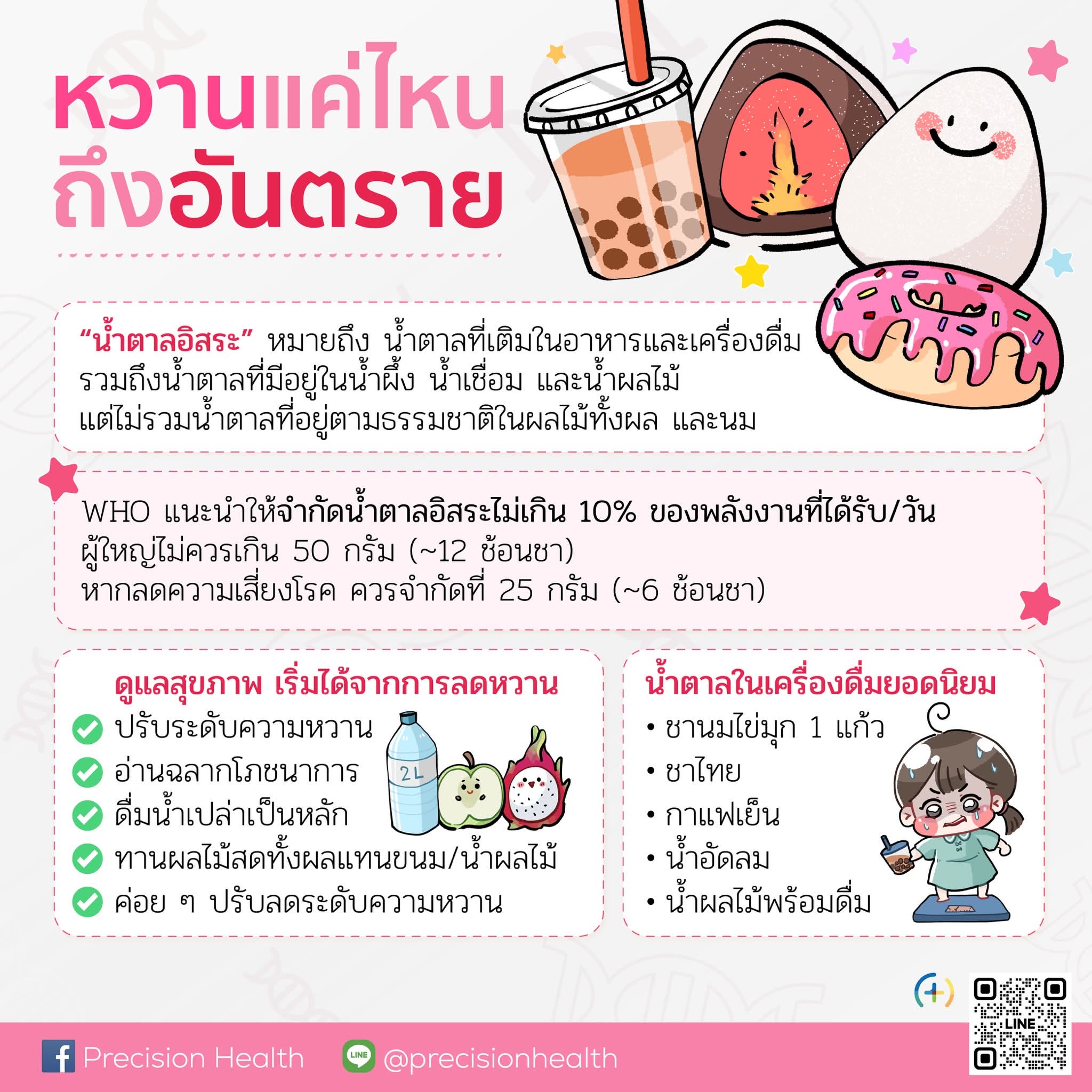
หวานแค่ไหน...ถึงอันตราย?
หลายคนคิดว่า "กินหวานนิดหน่อยคงไม่เป็นไร" แต่หากได้รับน้ำตาลมากเกินความต้องการของร่างกายเป็นประจำ อาจเพิ่มความเสี่ยงต่อโรคเรื้อรังหลายชนิดได้
ร่างกายควรได้รับน้ำตาลเท่าไร?
องค์การอนามัยโลก (WHO) แนะนำให้จำกัด น้ำตาลอิสระ (Free Sugars) ไม่เกิน 10% ของพลังงานที่ได้รับต่อวัน และหากลดเหลือ ไม่เกิน 5% จะยิ่งส่งผลดีต่อสุขภาพ
สำหรับผู้ใหญ่ที่ต้องการพลังงานประมาณ 2,000 กิโลแคลอรีต่อวัน
- ไม่ควรเกิน 50 กรัม หรือประมาณ 12 ช้อนชา
- หากต้องการลดความเสี่ยงต่อโรค ควรจำกัดไว้ที่ 25 กรัม หรือประมาณ 6 ช้อนชา
“น้ำตาลอิสระ” หมายถึง น้ำตาลที่เติมในอาหารและเครื่องดื่ม รวมถึงน้ำตาลที่มีอยู่ในน้ำผึ้ง น้ำเชื่อม และน้ำผลไม้ แต่ไม่รวมน้ำตาลที่อยู่ตามธรรมชาติในผลไม้ทั้งผล และนม
หากกินหวานมากเกินไปเป็นประจำ อาจเพิ่มความเสี่ยงต่อ
- โรคอ้วน
- โรคเบาหวานชนิดที่ 2
- โรคหัวใจและหลอดเลือด
- ไขมันพอกตับ
- ฟันผุ
- ระดับไตรกลีเซอไรด์ในเลือดสูง
ระวัง! น้ำตาลซ่อนอยู่ในเครื่องดื่มยอดนิยม
- ชานมไข่มุก 1 แก้ว
- ชาไทย
- กาแฟเย็น
- น้ำอัดลม
- น้ำผลไม้พร้อมดื่ม
เครื่องดื่มเหล่านี้หลายชนิดอาจมีน้ำตาลเกิน 6 ช้อนชา ต่อหนึ่งหน่วยบริโภค แม้จะดื่มเพียงวันละแก้วก็อาจทำให้ได้รับน้ำตาลเกินคำแนะนำได้
ดูแลสุขภาพ เริ่มได้จากการลดหวาน
1. ปรับระดับความหวาน: เลือกสั่งแบบ "หวานน้อย" หรือ "ไม่หวานเลย"
2. อ่านฉลากโภชนาการ: สังเกตปริมาณน้ำตาล (กรัม) ก่อนซื้อทุกครั้ง
3. ดื่มน้ำเปล่าเป็นหลัก: ใช้น้ำเปล่าแทนน้ำหวานในระหว่างวัน
4. ทานผลไม้สดทั้งผล: เลือกรับประทานผลไม้สดแทนขนมหวานหรือน้ำผลไม้
5. ค่อย ๆ ปรับลิ้น: ลดระดับความหวานทีละนิด เพื่อให้ลิ้นคุ้นเคยกับรสชาติธรรมชาติของอาหาร
ความหวานในปริมาณที่เหมาะสมช่วยสร้างความสุขในการกินได้ แต่ "การเลือกกินอย่างพอดี" คือกุญแจสำคัญที่สุดในการดูแลสุขภาพระยะยาว
How Sweet Is Too Sweet?
Many people think, _“A little sweetness won’t hurt.”_ However, regularly consuming more sugar than your body needs can increase the risk of several chronic diseases.
How Much Sugar Should We Consume?
The World Health Organization (WHO) recommends limiting free sugars to less than 10% of total daily energy intake. Reducing intake to less than 5% provides additional health benefits.
For an adult consuming approximately 2,000 kcal per day:
- No more than 50 grams (about 12 teaspoons) of free sugars per day
- Ideally, no more than 25 grams (about 6 teaspoons) per day to help reduce the risk of chronic diseases
What are “Free Sugars”?
Free sugars include sugars added to foods and beverages, as well as sugars naturally present in honey, syrups, and fruit juices. They do not include sugars naturally found in whole fruits or milk.
Health Risks of Excess Sugar Intake
Regularly consuming too much sugar may increase the risk of:
- Obesity
- Type 2 diabetes
- Cardiovascular disease
- Fatty liver disease
- Tooth decay
- High blood triglyceride levels
Watch Out for Hidden Sugar in Popular Drinks
Common beverages that may contain excessive amounts of sugar include:
- Bubble milk tea
- Thai iced tea
- Iced coffee
- Soft drinks
- Ready-to-drink fruit juices
Many of these beverages contain more than 6 teaspoons of sugar per serving. Drinking just one serving a day may already exceed the recommended daily intake.
Simple Ways to Reduce Sugar Intake
1. Choose less sweetness – Order drinks with less sugar or no added sugar whenever possible.
2. Read the Nutrition Facts label – Check the amount of sugar (grams) before purchasing.
3. Drink more water – Make water your primary beverage instead of sugary drinks.
4. Eat whole fruits – Choose fresh whole fruits instead of desserts or fruit juices.
5. Gradually retrain your taste buds – Reduce sweetness little by little to become accustomed to the natural flavors of foods.
Sweet foods can certainly be enjoyed as part of a balanced diet, but moderation is the key to maintaining good health in the long term.