Precision Health Co., Ltd.
ภาวะไขมันคอเลสเตอรอลในเลือดสูง (High Cholesterol)
ภาวะไขมันคอเลสเตอรอลในเลือดสูง (High Cholesterol)
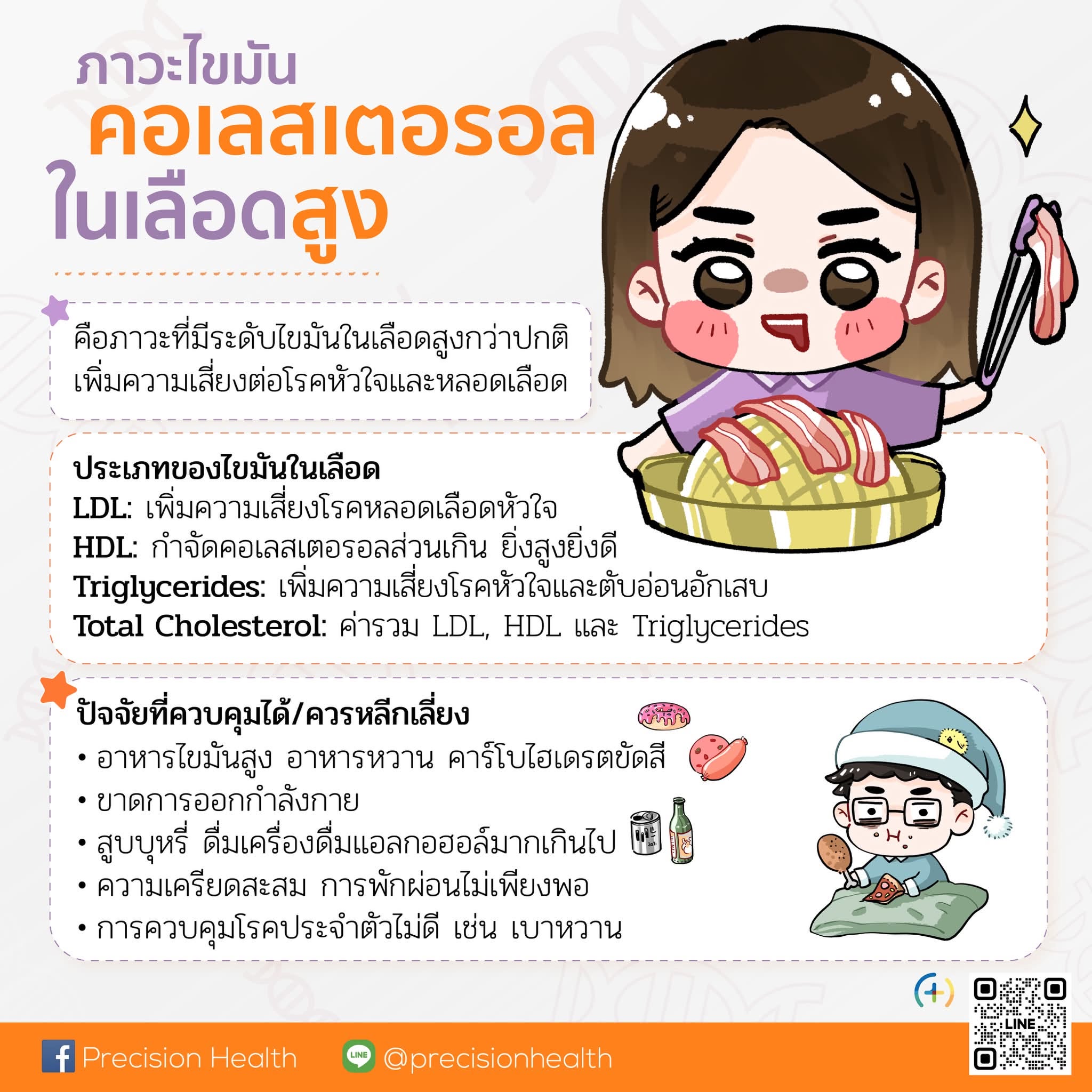
ภาวะไขมันคอเลสเตอรอลในเลือดสูง (High Cholesterol) คือ ภาวะที่ร่างกายมีระดับไขมันในเลือดสูงกว่าปกติ โดยเฉพาะ LDL (Low-Density Lipoprotein) หรือ "ไขมันเลว" ซึ่งสามารถสะสมตามผนังหลอดเลือด ทำให้หลอดเลือดตีบหรืออุดตัน และเพิ่มความเสี่ยงต่อโรคหัวใจและหลอดเลือด
คอเลสเตอรอลเป็นไขมันที่ร่างกายจำเป็นต้องใช้ในการสร้างเซลล์ ฮอร์โมน และวิตามินดี แต่หากมีมากเกินไป อาจส่งผลเสียต่อสุขภาพในระยะยาว
ประเภทของไขมันในเลือด
- LDL (Low-Density Lipoprotein) หรือไขมันเลว: หากมีระดับสูง จะเพิ่มความเสี่ยงของโรคหลอดเลือดหัวใจและโรคหลอดเลือดสมอง
- HDL (High-Density Lipoprotein) หรือไขมันดี: ช่วยกำจัดคอเลสเตอรอลส่วนเกินออกจากหลอดเลือด ยิ่งมีระดับสูงยิ่งดี
- Triglycerides (ไตรกลีเซอไรด์): หากสูงร่วมกับ LDL สูง จะเพิ่มความเสี่ยงต่อโรคหัวใจและตับอ่อนอักเสบ
- Total Cholesterol: ค่าคอเลสเตอรอลรวม ใช้ประเมินร่วมกับค่า LDL, HDL และ Triglycerides
ปัจจัยที่ควบคุมได้ / ควรหลีกเลี่ยง (Modifiable Risk Factors)
ปัจจัยเหล่านี้สามารถปรับเปลี่ยนได้ด้วยการดูแลสุขภาพ และการปรับพฤติกรรม
- อาหารที่มีไขมันอิ่มตัวและไขมันทรานส์สูง เช่น ของทอด อาหารแปรรูป เนื้อสัตว์ติดมัน
- อาหารหวานและคาร์โบไฮเดรตขัดสีมากเกินไป
- ขาดการออกกำลังกาย
- สูบบุหรี่ ซึ่งทำให้ระดับ HDL (ไขมันดี) ลดลง
- ดื่มเครื่องดื่มแอลกอฮอล์มากเกินไป
- ความเครียดสะสมและการพักผ่อนไม่เพียงพอ ซึ่งอาจส่งผลต่อพฤติกรรมการกินและสุขภาพโดยรวม
- การควบคุมโรคประจำตัวไม่ดี เช่น เบาหวาน ความดันโลหิตสูง
ปัจจัยที่ควบคุมไม่ได้ (Non-Modifiable Risk Factors)
ปัจจัยเหล่านี้ไม่สามารถเปลี่ยนแปลงได้ แต่สามารถเฝ้าระวังและป้องกันภาวะแทรกซ้อนได้
- อายุที่เพิ่มขึ้น ความเสี่ยงของไขมันในเลือดสูงจะเพิ่มขึ้นตามวัย
- พันธุกรรม เช่น ภาวะไขมันในเลือดสูงจากพันธุกรรม (Familial Hypercholesterolemia)
- ประวัติครอบครัว มีพ่อ แม่ หรือพี่น้องเป็นโรคไขมันในเลือดสูงหรือโรคหัวใจตั้งแต่อายุน้อย
- เพศ ผู้ชายมักมีความเสี่ยงในวัยที่อายุน้อยกว่า ส่วนผู้หญิงมีความเสี่ยงเพิ่มขึ้นหลังหมดประจำเดือน เนื่องจากระดับฮอร์โมนเอสโตรเจนลดลง
ไขมันในเลือดสูงเป็นภาวะที่ควรได้รับความสนใจและป้องกันตั้งแต่เนิ่น ๆ แม้ปัจจัยบางอย่างจะควบคุมไม่ได้ แต่การรับประทานอาหารที่เหมาะสม ออกกำลังกายสม่ำเสมอ และตรวจสุขภาพเป็นประจำ สามารถช่วยลดความเสี่ยงของโรคหัวใจและหลอดเลือดจากภาวะไขมันในเลือดสูงได้อย่างมีประสิทธิภาพ
High Cholesterol (Hypercholesterolemia)
High cholesterol is a condition in which the levels of cholesterol and other lipids in the blood are higher than normal, particularly low-density lipoprotein (LDL), commonly known as "bad cholesterol." Excess LDL can accumulate on the walls of blood vessels, leading to narrowing or blockage of the arteries and increasing the risk of cardiovascular diseases, including heart attack and stroke.
Cholesterol is an essential type of fat that the body needs to build cells, produce hormones, and synthesize vitamin D. However, excessive cholesterol can have harmful long-term effects on overall health.
Types of Blood Lipids
- LDL (Low-Density Lipoprotein) – "Bad Cholesterol" High LDL levels increase the risk of coronary artery disease and stroke by promoting plaque buildup in the arteries.
- HDL (High-Density Lipoprotein) – "Good Cholesterol" HDL helps remove excess cholesterol from the bloodstream and transports it to the liver for elimination. Higher HDL levels are generally associated with better cardiovascular health.
- Triglycerides Elevated triglyceride levels, particularly when combined with high LDL levels, increase the risk of cardiovascular disease and pancreatitis.
- Total Cholesterol
This is the total amount of cholesterol in the blood and is evaluated together with LDL, HDL, and triglyceride levels to assess cardiovascular risk.
Modifiable Risk Factors
These risk factors can be improved through lifestyle modifications and appropriate medical management.
- Consuming foods high in saturated fats and trans fats, such as fried foods, processed foods, and fatty meats.
- Excessive intake of sugary foods and refined carbohydrates.
- Physical inactivity or lack of regular exercise.
- Smoking, which lowers HDL ("good cholesterol") levels.
- Excessive alcohol consumption.
- Chronic stress and insufficient sleep, which may negatively affect eating habits and overall health.
- Poor control of underlying medical conditions such as diabetes and hypertension.
Non-Modifiable Risk Factors
These risk factors cannot be changed; however, understanding them allows for early monitoring and timely prevention of potential complications.
• Advancing age: The risk of developing high cholesterol increases with age.
• Genetics: Inherited conditions, such as Familial Hypercholesterolemia (FH), can significantly increase cholesterol levels.
• Family history: Having a parent or sibling with high cholesterol or premature cardiovascular disease increases an individual’s risk.
• Sex: Men generally have a higher risk of developing high cholesterol at a younger age, while women’s risk increases after menopause due to declining estrogen levels.
Prevention and Management
High cholesterol is a health condition that should not be overlooked. While some risk factors cannot be modified, adopting a heart-healthy lifestyle—including a balanced diet, regular physical activity, maintaining a healthy weight, avoiding smoking, limiting alcohol consumption, and undergoing regular health screenings—can significantly reduce the risk of cardiovascular disease associated with high cholesterol.