Precision Health Co., Ltd.
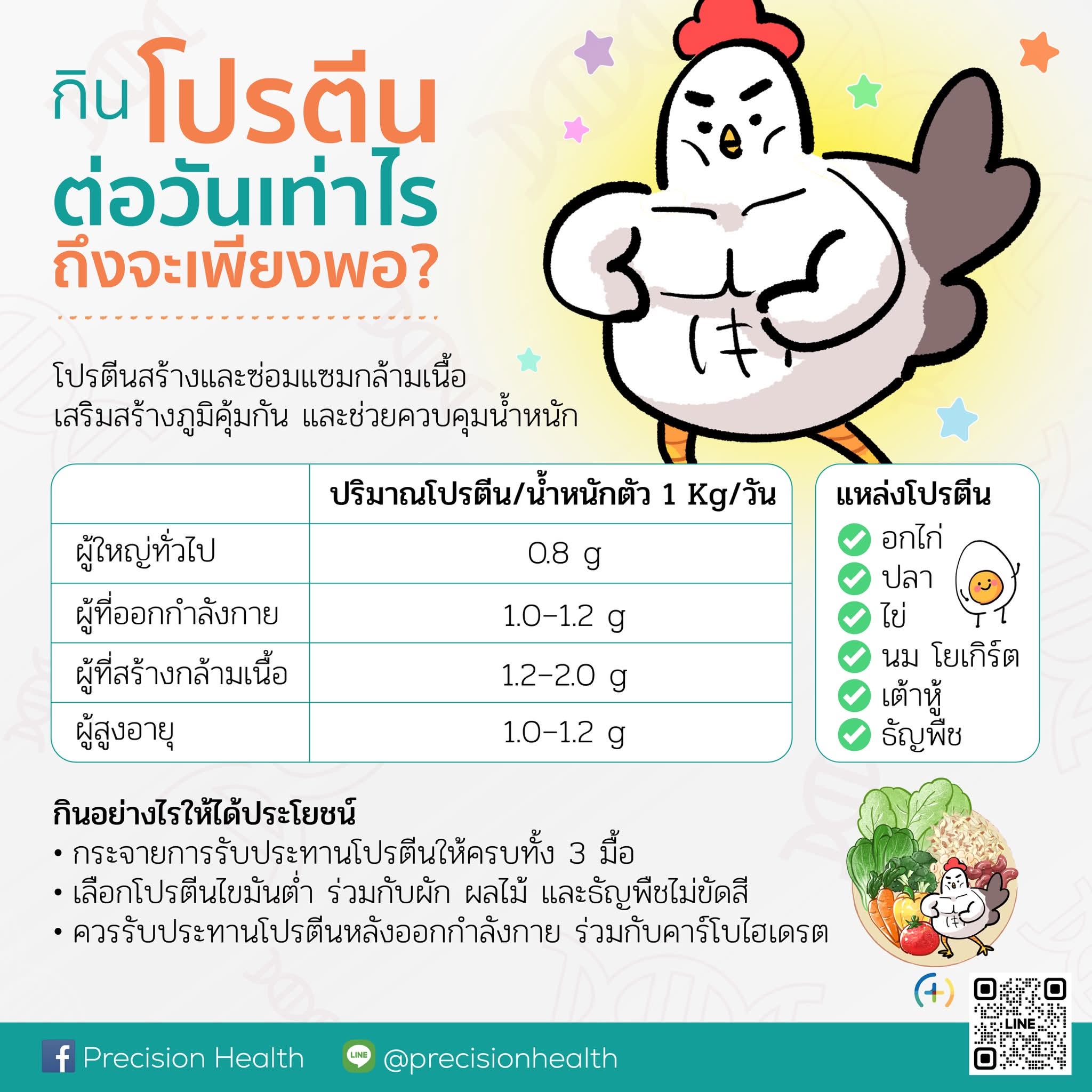
กินโปรตีนต่อวันเท่าไร ถึงจะเพียงพอ?
หลายคนให้ความสำคัญกับการรับประทานโปรตีนมากขึ้น ไม่ว่าจะเพื่อสร้างกล้ามเนื้อ ลดน้ำหนัก หรือดูแลสุขภาพ แต่คำถามที่พบบ่อยคือ "เราควรกินโปรตีนวันละเท่าไร?"
โปรตีนสำคัญอย่างไร?
โปรตีนเป็นสารอาหารหลักที่ร่างกายต้องการ มีบทบาทสำคัญในการ
- สร้างและซ่อมแซมกล้ามเนื้อ เนื้อเยื่อ และอวัยวะต่าง ๆ
- ช่วยเสริมสร้างภูมิคุ้มกัน
- เป็นส่วนประกอบของเอนไซม์และฮอร์โมน
- ช่วยให้อิ่มนาน ลดความอยากอาหาร และช่วยควบคุมน้ำหนัก
ควรกินโปรตีนวันละเท่าไร?
ปริมาณโปรตีนที่แนะนำจะแตกต่างกันตามกิจกรรมและเป้าหมายของแต่ละคน
- ผู้ใหญ่ทั่วไป: 0.8 กรัมต่อน้ำหนักตัว 1 กิโลกรัมต่อวัน
- ผู้ที่ออกกำลังกายเป็นประจำ: 1.0–1.2 กรัมต่อน้ำหนักตัว 1 กิโลกรัมต่อวัน
- ผู้ที่ต้องการสร้างกล้ามเนื้อ: 1.2–2.0 กรัมต่อน้ำหนักตัว 1 กิโลกรัมต่อวัน
- ผู้สูงอายุ: 1.0–1.2 กรัมต่อน้ำหนักตัว 1 กิโลกรัมต่อวัน เพื่อช่วยรักษามวลกล้ามเนื้อ
ตัวอย่าง
- น้ำหนัก 50 กก. ควรได้รับโปรตีนประมาณ 40 กรัม/วัน
- น้ำหนัก 60 กก. ควรได้รับโปรตีนประมาณ 48 กรัม/วัน
- น้ำหนัก 70 กก. ควรได้รับโปรตีนประมาณ 56 กรัม/วัน
แหล่งโปรตีนคุณภาพ
เลือกโปรตีนจากอาหารที่หลากหลาย เช่น
- อกไก่
- ปลา
- ไข่
- นมและโยเกิร์ต
- เต้าหู้และผลิตภัณฑ์จากถั่วเหลือง
- ถั่วเมล็ดแห้งและธัญพืช
กินโปรตีนอย่างไรให้ได้ประโยชน์
- กระจายการรับประทานโปรตีนให้ครบทั้ง 3 มื้อ แทนการกินปริมาณมากในมื้อเดียว
- เลือกโปรตีนไขมันต่ำและรับประทานร่วมกับผัก ผลไม้ และธัญพืชไม่ขัดสี เพื่อให้ได้รับสารอาหารครบถ้วน
- หากออกกำลังกาย ควรรับประทานโปรตีนหลังออกกำลังกายร่วมกับคาร์โบไฮเดรตในปริมาณที่เหมาะสม เพื่อช่วยฟื้นฟูและเสริมสร้างกล้ามเนื้อ
โปรตีนเป็นสารอาหารที่จำเป็นต่อการทำงานของร่างกาย การได้รับโปรตีนในปริมาณที่เหมาะสมกับน้ำหนักตัวและระดับกิจกรรม จะช่วยเสริมสร้างกล้ามเนื้อ ซ่อมแซมส่วนที่สึกหรอ ทำให้อิ่มนาน และส่งเสริมสุขภาพโดยรวมได้อย่างมีประสิทธิภาพ
How Much Protein Should You Eat Per Day?
More people are paying attention to their protein intake—whether it's to build muscle, lose weight, or maintain overall health. But one common question remains: How much protein do we actually need each day?
Why Is Protein Important?
Protein is one of the body's essential macronutrients and plays several important roles, including:
- Building and repairing muscles, tissues, and organs
- Supporting a healthy immune system
- Serving as a key component of enzymes and hormones
- Helping you feel full longer, reducing hunger, and supporting weight management
How Much Protein Do You Need?
The recommended daily protein intake varies depending on your activity level and health goals.
- General adults: 0.8 g per kg of body weight per day
- People who exercise regularly: 1.0–1.2 g per kg of body weight per day
- People aiming to build muscle: 1.2–2.0 g per kg of body weight per day
- Older adults: 1.0–1.2 g per kg of body weight per day to help maintain muscle mass
Examples
- 50 kg body weight: Approximately 40 g of protein per day
- 60 kg body weight: Approximately 48 g of protein per day
- 70 kg body weight: Approximately 56 g of protein per day
High-Quality Protein Sources
Choose a variety of protein-rich foods, such as:
- Chicken breast
- Fish
- Eggs
- Milk and yogurt
- Tofu and soy products
- Beans, legumes, and whole grains
Tips for Getting the Most from Protein
- Spread your protein intake evenly across all three meals instead of consuming most of it in one meal.
- Choose lean protein sources and combine them with vegetables, fruits, and whole grains for a balanced diet.
- If you exercise, consume protein along with an appropriate amount of carbohydrates after your workout to support muscle recovery and growth.
Protein is an essential nutrient that supports many vital functions in the body. Consuming the right amount of protein based on your body weight and activity level can help build and maintain muscle, repair body tissues, increase satiety, and promote overall health.