Precision Health Co., Ltd.
อาการคันเต้านมหรือคันหัวนม เกิดจากอะไร? และแบบไหนที่ควรระวัง
อาการคันเต้านมหรือคันหัวนม เกิดจากอะไร? และแบบไหนที่ควรระวัง
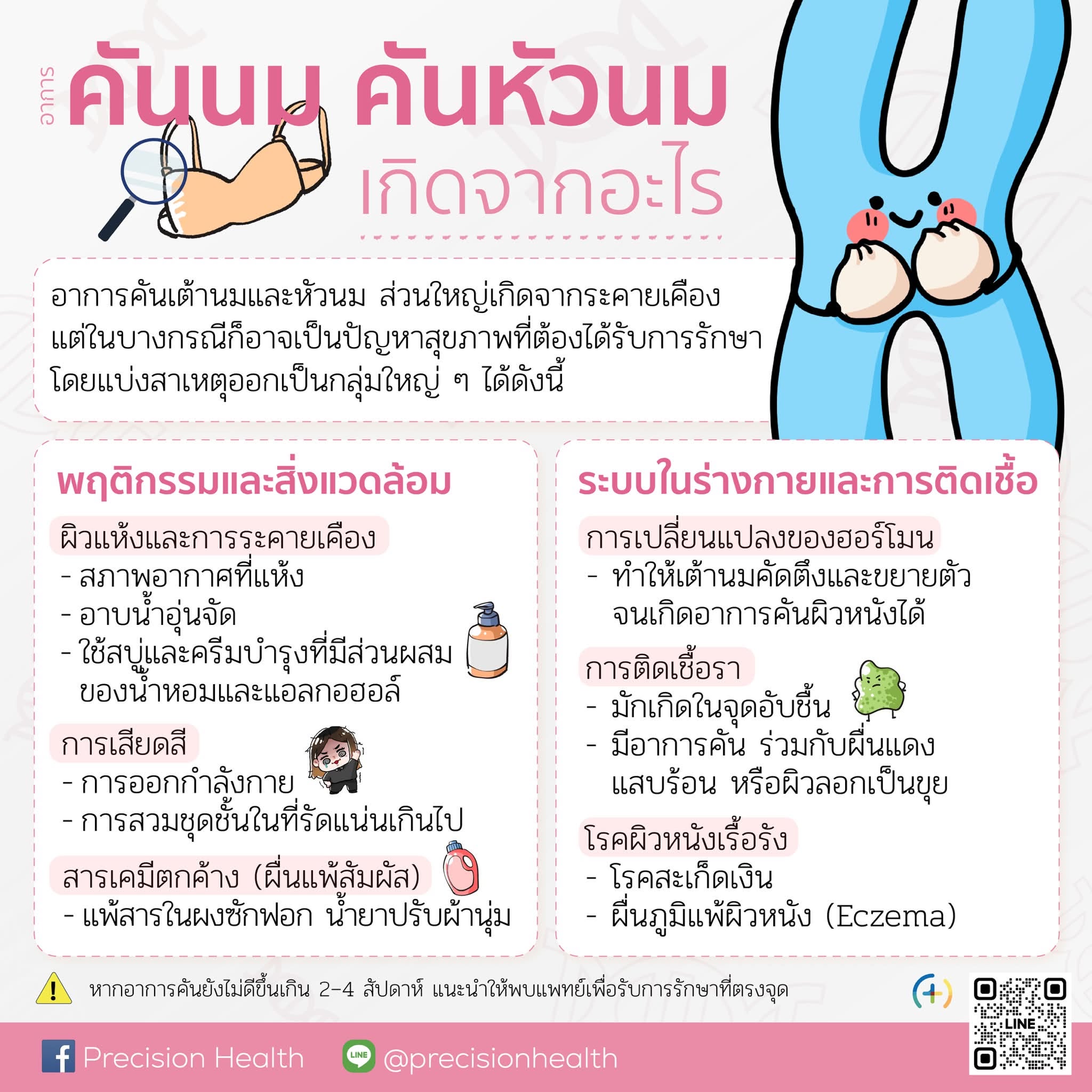
อาการคันบริเวณเต้านมและหัวนมเป็นเรื่องที่เกิดขึ้นได้กับทุกคน ส่วนใหญ่มักเกิดจากระคายเคืองทั่วไป แต่ในบางกรณีก็อาจเป็นสัญญาณเตือนของปัญหาสุขภาพที่ต้องได้รับการรักษา โดยสามารถแบ่งสาเหตุออกเป็นกลุ่มใหญ่ ๆ ได้ดังนี้
1. สาเหตุทั่วไปจากพฤติกรรมและสิ่งแวดล้อม
- ผิวแห้งและการระคายเคือง: เกิดจากสภาพอากาศที่แห้ง การอาบน้ำอุ่นจัดบ่อยเกินไป หรือการใช้สบู่และครีมบำรุงผิวที่มีส่วนผสมของน้ำหอมและแอลกอฮอล์
- การเสียดสี: โดยเฉพาะจากการออกกำลังกาย เช่น การวิ่งระยะไกล หรือการสวมใส่ชุดชั้นในที่รัดแน่นจนเกินไป รวมถึงผ้าลูกไม้และผ้าใยสังเคราะห์ที่หยาบหนา
-สารเคมีตกค้าง (ผื่นแพ้สัมผัส): การแพ้สารเคมีในผงซักฟอก น้ำยาปรับผ้านุ่ม หรือเนื้อผ้าบางชนิด ทำให้เกิดผื่นคัน แดง หรือแห้งลอก
2. สาเหตุจากระบบภายในร่างกายและการติดเชื้อ
- การเปลี่ยนแปลงของฮอร์โมน: พบได้บ่อยในช่วงก่อนมีประจำเดือน ระหว่างตั้งครรภ์ หรือช่วงวัยหมดประจำเดือน ซึ่งฮอร์โมนที่แกว่งตัวจะทำให้เต้านมคัดตึงและขยายตัวจนเกิดอาการคันผิวหนังได้
- การติดเชื้อรา: มักเกิดในจุดอับชื้น เช่น ใต้ราวนมหรือรอบหัวนม โดยเฉพาะในผู้ที่มีเหงื่อออกมาก จะมีอาการคัน ร่วมกับผื่นแดง แสบร้อน หรือผิวลอกเป็นขุย
- โรคผิวหนังเรื้อรัง: เช่น โรคสะเก็ดเงิน หรือผื่นภูมิแพ้ผิวหนัง (Eczema)
สัญญาณเตือนรอยโรคอันตราย (เมื่อไหร่ที่ต้องรีบพบแพทย์)
แม้จะพบได้น้อย แต่อาการคันหัวนมอย่างต่อเนื่องอาจเป็นสัญญาณของ โรคพาเจ็ทของหัวนม (Paget's disease of the breast) ซึ่งเป็นมะเร็งเต้านมชนิดหนึ่ง หากมีอาการคันร่วมกับสัญญาณเตือนเหล่านี้ ควรรีบพบแพทย์โดยด่วน:
- มีก้อนแข็งผิดปกติใต้ผิวหนังบริเวณเต้านมหรือรักแร้
- หัวนมบุ๋ม เปลี่ยนรูปทรง หรือบิดเบี้ยวไปจากเดิม
- ผิวบริเวณหัวนมหนาตัวขึ้น หยาบกร้าน แดง หรือลอกเป็นสะเก็ดคล้ายแผลตกสะเก็ดที่ไม่ยอมหาย
- มีของเหลว สารคัดหลั่ง หรือเลือดไหลออกจากหัวนม
วิธีดูแลและป้องกันเบื้องต้น
- เลือกบราให้ถูก: สวมชุดชั้นในที่พอดีตัว ทำจากผ้าฝ้าย (Cotton) ที่ระบายอากาศได้ดี เพื่อลดการอับชื้นและการเสียดสี
- ปรับผลิตภัณฑ์ซักผ้า: เปลี่ยนมาใช้ผงซักฟอกหรือน้ำยาปรับผ้านุ่มสูตรอ่อนโยน (Sensitive/Baby)
- เติมความชุ่มชื้น: ทามอยส์เจอไรเซอร์สูตรปราศจากน้ำหอมและแอลกอฮอล์ทันทีหลังอาบน้ำ (หลีกเลี่ยงการทาตรงยอดหัวนมหากไม่ได้แห้งรุนแรง)
- ปรับพฤติกรรม: เลี่ยงการอาบน้ำอุ่นจัด และ ห้ามเกา เด็ดขาด เพราะจะทำให้ผิวอักเสบติดเชื้อแบคทีเรียซ้ำซ้อนได้
ข้อแนะนำ: หากลองปรับพฤติกรรมและทาครีมบำรุงแล้ว แต่อาการคันยังไม่ดีขึ้นนานเกิน 2–4 สัปดาห์ หรือมีอาการในกลุ่มสัญญาณเตือนอันตรายร่วมด้วย แนะนำให้เข้าพบแพทย์เพื่อตรวจวินิจฉัยอย่างละเอียดและรับการรักษาที่ตรงจุด
What Causes Itchy Breasts or Itchy Nipples? When Should You Be Concerned?
Itching of the breasts or nipples is a common symptom that can affect anyone. In most cases, it is caused by minor skin irritation. However, in some cases, persistent itching may be a sign of an underlying medical condition that requires evaluation and treatment. The possible causes can be grouped as follows:
1. Common Causes Related to Lifestyle and Environmental Factors
Dry skin and skin irritation:
Dry weather, frequent hot showers, or the use of soaps and skincare products containing fragrances or alcohol can dry out the skin and cause itching.
Friction:
Repeated rubbing during physical activities, such as long-distance running, or wearing tight-fitting bras can irritate the skin. Lace or rough synthetic fabrics may also contribute to itching.
Allergic contact dermatitis:
An allergic reaction to laundry detergents, fabric softeners, or certain fabrics can lead to itchy, red, dry, or flaky skin.
2. Internal Causes and Infections
Hormonal changes:
Hormonal fluctuations before menstruation, during pregnancy, or after menopause can cause breast tenderness and stretching of the skin, resulting in itching.
Fungal infection:
Fungal infections commonly occur in warm, moist areas such as beneath the breasts or around the nipples, especially in people who sweat excessively. Symptoms may include itching, redness, burning, and flaky skin.
Chronic skin conditions:
Certain skin disorders, such as eczema (atopic dermatitis) or psoriasis, can also cause persistent itching around the breast and nipple area.
Warning Signs: When Should You See a Doctor?
Although uncommon, persistent itching of the nipple may be a symptom of Paget's disease of the breast, a rare form of breast cancer. Seek medical attention promptly if itching is accompanied by any of the following warning signs:
- A hard lump in the breast or under the arm
- A nipple that becomes inverted, changes shape, or appears distorted
- Thickened, rough, red, scaly, or crusted skin on or around the nipple that does not heal
- Discharge or bleeding from the nipple
Tips for Relief and Prevention
Choose the right bra:
Wear a properly fitting bra made from breathable cotton fabric to reduce moisture buildup and friction.
Switch to gentle laundry products:
Use fragrance-free or hypoallergenic laundry detergents and fabric softeners designed for sensitive skin.
Keep the skin moisturized:
Apply a fragrance-free, alcohol-free moisturizer immediately after bathing. Avoid applying moisturizer directly to the nipple unless it is severely dry.
Avoid triggers:
Take lukewarm rather than hot showers, and avoid scratching the affected area, as scratching can worsen inflammation and increase the risk of secondary bacterial infection.
When to Seek Medical Advice
If the itching persists for more than 2–4 weeks despite self-care measures, or if any of the warning signs above are present, consult a healthcare professional for a thorough evaluation and appropriate treatment.
By adminph
Posted 2026-07-09 00:00:00