Precision Health Co., Ltd.
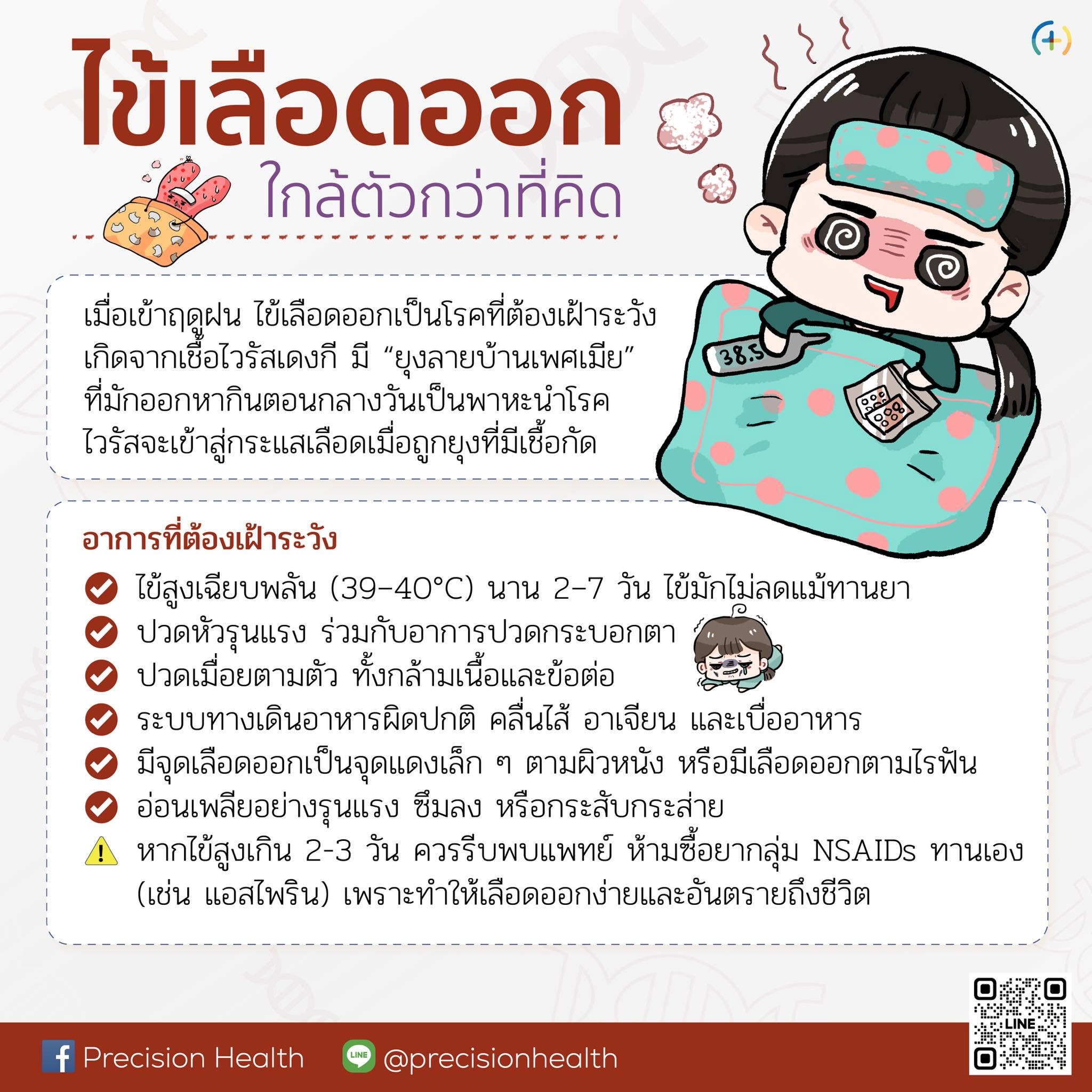
“ไข้เลือดออก” ใกล้ตัวกว่าที่คิด
“ไข้เลือดออก” ใกล้ตัวกว่าที่คิด
เมื่อเข้าสู่ฤดูฝน ความชื้นและแหล่งน้ำขังที่เพิ่มขึ้นกลายเป็นแหล่งเพาะพันธุ์ชั้นดีของยุงลาย ทำให้ โรคไข้เลือดออก (Dengue Fever) กลายเป็นหนึ่งในโรคระบาดที่ต้องเฝ้าระวังมากที่สุดในช่วงนี้
โรคนี้เกิดจากการติดเชื้อไวรัสเดงกี โดยมี “ยุงลายบ้านเพศเมีย” ที่มักออกหากินตอนกลางวันเป็นพาหะนำโรค เมื่อถูกยุงที่มีเชื้อกัด ไวรัสจะเข้าสู่กระแสเลือดและส่งผลต่อระบบต่าง ๆ ของร่างกาย ซึ่งหากไม่ได้รับการดูแลอย่างถูกต้องและทันท่วงที อาจอันตรายถึงขั้นเสียชีวิตได้
”อาการของไข้เลือดออกที่ต้องเฝ้าระวัง“
ในระยะแรก อาการอาจคล้ายไข้หวัดใหญ่ทั่วไป แต่จะมีสัญญาณเตือนสำคัญที่แตกต่างออกไป ดังนี้
1. ไข้สูงลอยเฉียบพลัน (39–40°C) ยาวนาน 2–7 วัน และไข้มักไม่ลดแม้จะทานยาลดไข้
2. ปวดหัวรุนแรง ร่วมกับอาการปวดกระบอกตา
3. ปวดเมื่อยตามตัว ทั้งกล้ามเนื้อและข้อต่อ
4. ระบบทางเดินอาหารผิดปกติ คลื่นไส้ อาเจียน และเบื่ออาหาร
5. มีจุดเลือดออก เป็นจุดแดงเล็ก ๆ ตามผิวหนัง (ไม่ยุบตัวเมื่อกด) หรือมีเลือดออกตามไรฟัน
6. อ่อนเพลียอย่างรุนแรง ซึมลง หรือกระสับกระส่าย
ข้อควรระวังวิกฤต: หากมีไข้สูงเกิน 2-3 วัน ควรรีบพบแพทย์ ห้ามซื้อยากลุ่ม NSAIDs ทานเองเด็ดขาด (เช่น ไอบูโพรเฟน, แอสไพริน) เพราะจะยิ่งทำให้เลือดออกง่ายและอันตรายถึงชีวิต
5 วิธีป้องกันตัดวงจรยุงลาย
เนื่องจากปัจจุบันยังไม่มียารักษาไวรัสเดงกีโดยตรง การรักษาจึงเป็นแบบประคับประคองตามอาการ ดังนั้นการป้องกันจึงเป็นเกราะคุ้มกันที่ดีที่สุด:
1. ทำลายแหล่งน้ำขัง: คว่ำภาชนะที่มีน้ำขังรอบบ้าน (เช่น ยางรถยนต์เก่า จานรองกระถางต้นไม้) ทุก ๆ 7 วัน
2. ปิดฝาภาชนะมิดชิด: โอ่งน้ำหรือถังเก็บน้ำต้องมีฝาปิด หรือใส่ทรายอะเบทเพื่อกำจัดลูกน้ำ
3. แต่งตัวมิดชิด: สวมเสื้อแขนยาวและกางเกงขายาวเมื่อต้องอยู่ในจุดที่อับสายตาหรือมียุงชุม
4. ใช้สิ่งป้องกันยุง: ทาโลชั่นหรือฉีดสเปรย์กันยุง และติดมุ้งลวดหรือนอนในมุ้ง
5. พิจารณาวัคซีน: ปัจจุบันมีวัคซีนป้องกันไข้เลือดออก ซึ่งช่วยลดความรุนแรงของโรคและการนอนโรงพยาบาลได้ (ควรปรึกษาแพทย์)
“Dengue Fever” Is Closer Than You Think
As the rainy season arrives, increased humidity and standing water create ideal breeding grounds for mosquitoes. As a result, Dengue Fever becomes one of the most important infectious diseases to watch out for during this period.
Dengue fever is caused by the dengue virus and is transmitted primarily by the female Aedes aegypti mosquito, which is most active during the daytime. When an infected mosquito bites a person, the virus enters the bloodstream and can affect multiple body systems. Without proper and timely medical care, the disease can become severe and may even be life-threatening.
Warning Signs and Symptoms of Dengue Fever
In the early stage, dengue fever may resemble the flu, but there are several warning signs to watch for:
- Sudden high fever (39–40°C) lasting 2–7 days, often not responding well to fever-reducing medications.
- Severe headache accompanied by pain behind the eyes.
- Muscle and joint pain, often causing significant body aches.
- Digestive symptoms, including nausea, vomiting, and loss of appetite.
- Bleeding manifestations, such as tiny red spots on the skin that do not disappear when pressed, or bleeding gums.
- Extreme fatigue, drowsiness, restlessness, or decreased alertness.
Important warning: If a high fever persists for more than 2–3 days, medical attention should be sought immediately. Avoid taking NSAIDs such as ibuprofen or aspirin without medical advice, as these medications can increase the risk of bleeding and may lead to serious complications.
Five Ways to Prevent Dengue Fever
Since there is currently no specific antiviral treatment for dengue virus infection, treatment mainly focuses on supportive care. Therefore, prevention remains the best protection.
1. Eliminate standing water
Empty or overturn containers that collect water, such as old tires and plant saucers, at least once a week.
2. Cover water storage containers
Keep water tanks and jars tightly covered, or use larvicides to eliminate mosquito larvae.
3. Wear protective clothing
Wear long-sleeved shirts and long pants, especially in areas where mosquitoes are common.
4. Use mosquito protection
Apply mosquito repellent, use mosquito sprays, install window screens, or sleep under mosquito nets.
5. Consider dengue vaccination
Dengue vaccines are now available and can help reduce the severity of the disease and the risk of hospitalization. Consultation with a healthcare professional is recommended to determine whether vaccination is appropriate.