Precision Health Co., Ltd.
โรคที่ป้องกันได้ด้วยการตรวจคัดกรองตั้งแต่เนิ่น ๆ
โรคที่ป้องกันได้ด้วยการตรวจคัดกรองตั้งแต่เนิ่น ๆ
หลายโรคอาจไม่แสดงอาการในระยะแรก แต่กำลังค่อย ๆ ส่งผลกระทบต่อสุขภาพโดยที่เราไม่รู้ตัว การตรวจคัดกรองสุขภาพเป็นประจำจึงมีความสำคัญอย่างยิ่ง เพราะช่วยค้นหาความเสี่ยงหรือความผิดปกติได้ตั้งแต่ ระยะก่อนแสดงอาการ (Asymptomatic stage) ทำให้สามารถรักษาหรือยับยั้งการดำเนินโรคได้ง่ายขึ้น ลดความรุนแรง และเพิ่มโอกาสในการหายขาดหรือควบคุมโรคได้ในระยะยาว
1. กลุ่มโรคมะเร็ง (Cancer Screening)
มะเร็งหลายชนิดสามารถตรวจพบได้ตั้งแต่ระยะเริ่มแรก หรือแม้กระทั่งระยะก่อนเป็นมะเร็ง (Pre-cancerous stage) ซึ่งช่วยเพิ่มโอกาสรอดชีวิตได้อย่างมีนัยสำคัญ:
- มะเร็งปากมดลูก: ตรวจคัดกรองด้วย Pap Smear ร่วมกับการตรวจ HPV DNA Test ซึ่งสามารถตรวจพบเชื้อไวรัสที่เป็นสาเหตุหลักได้ก่อนที่เซลล์จะเปลี่ยนไปเป็นมะเร็ง
- มะเร็งเต้านม: ตรวจด้วยเครื่อง Mammogram ร่วมกับ Ultrasound แนะนำสำหรับสตรีอายุ 40 ปีขึ้นไป หรือผู้ที่มีประวัติครอบครัวสายตรง
- มะเร็งลำไส้ใหญ่และทวารหนัก: ตรวจหาเลือดแฝงในอุจจาระ (Fit Test) เป็นประจำทุกปี หรือ การส่องกล้องลำไส้ใหญ่ (Colonoscopy) ทุก ๆ 5-10 ปี สำหรับผู้ที่มีอายุ 45-50 ปีขึ้นไป
- มะเร็งตับ: ตรวจอัลตราซาวนด์ช่องท้องส่วนบนร่วมกับการตรวจเลือดหาค่าโปรตีน AFP ในกลุ่มผู้ป่วยตับอักเสบเรื้อรังหรือตับแข็ง
- มะเร็งต่อมลูกหมาก: ตรวจระดับสารบ่งชี้มะเร็ง PSA ในเลือด สำหรับผู้ชายอายุ 50 ปีขึ้นไป หรือผู้ที่มีความเสี่ยงสูง
2. โรคหลอดเลือดหัวใจและสมอง (Cardiovascular & Cerebrovascular Diseases)
โรคหัวใจมักเป็นภัยเงียบที่สะสมจากปัจจัยเสี่ยงนานนับปี การตรวจสุขภาพประจำปีเพื่อเช็ก ระดับไขมันในเลือด (Lipid Profile) และการตรวจคลื่นไฟฟ้าหัวใจ (EKG) ช่วยประเมินความเสี่ยงต่อภาวะหัวใจขาดเลือดและหลอดเลือดสมองอุดตัน/แตก ก่อนที่จะเกิดเหตุการณ์เฉียบพลัน
3. โรคเบาหวาน (Diabetes Mellitus)
ผู้ป่วยจำนวนมากไม่ทราบว่าตนเองมีภาวะน้ำตาลในเลือดสูงจนกระทั่งเกิดภาวะแทรกซ้อนที่ตา ไต หรือเส้นประสาท การตรวจระดับน้ำตาลในเลือดหลังอดอาหาร (Fasting Blood Sugar - FBS) หรือการตรวจน้ำตาลสะสม (HbA1c) เป็นประจำ ช่วยให้ตรวจพบภาวะก่อนเบาหวาน (Prediabetes) ซึ่งเป็นระยะที่สามารถย้อนกลับเป็นปกติได้ด้วยการปรับพฤติกรรม
4. โรคความดันโลหิตสูง (Hypertension)
โรคความดันโลหิตสูงมักไม่มีอาการเตือนใด ๆ แต่ปล่อยทิ้งไว้จะทำลายหลอดเลือดทั่วร่างกาย นำไปสู่โรคหัวใจ โรคหลอดเลือดสมอง และโรคไตเรื้อรัง การวัดความดันโลหิตอย่างสม่ำเสมอเป็นวิธีคัดกรองที่ง่ายที่สุดแต่มีประสิทธิภาพสูงสุด
5. โรคไตเรื้อรัง (chronic kidney disease - CKD)
ในระยะแรกมักไม่แสดงอาการใด ๆ จนกระทั่งเนื้อไตถูกทำลายไปมากกว่า 50% การตรวจคัดกรองด้วยการ ตรวจปัสสาวะ (UA) เพื่อหาโปรตีนรั่ว และการ ตรวจเลือดดูค่า creatinine เพื่อคำนวณอัตราการกรองของไต (eGFR) จะช่วยให้ตรวจพบและชะลอความเสื่อมของไตได้ทันท่วงที
6. โรคตับอักเสบและตับแข็ง (Hepatitis & Cirrhosis)
การตรวจหาเชื้อและภูมิคุ้มกัน ไวรัสตับอักเสบบีและซี (HBsAg / Anti-HCV) รวมถึงการตรวจการทำงานของตับ (Liver Function Test) เป็นสิ่งจำเป็น เนื่องจากเชื้อเหล่านี้เป็นสาเหตุหลักที่นำไปสู่ภาวะตับแข็งและมะเร็งตับในอนาคตโดยที่ผู้ป่วยไม่รู้ตัว
7. โรคทางพันธุกรรมและการวางแผนครอบครัว (Genetic Carrier Screening)
สำหรับคู่สมรสหรือผู้ที่วางแผนมีบุตร การตรวจพาหะโรคทางพันธุกรรม (Carrier Screening) โดยเฉพาะโรคที่พบบ่อย เช่น โรคธาลัสซีเมีย (Thalassemia) หรือการใช้เทคโนโลยีถอดรหัสพันธุกรรมขั้นสูงเพื่อตรวจพาหะโรคยีนด้อยหลายโรคพร้อมกัน (Expanded Carrier Screening) ช่วยประเมินความเสี่ยงในการถ่ายทอดโรคสู่ลูกได้อย่างแม่นยำ ทำให้สามารถวางแผนการมีบุตรได้อย่างเหมาะสม เช่น การทำเด็กหลอดแก้วร่วมกับการตรวจวินิจฉัยตัวอ่อนก่อนฝังตัว (PGT-M)
สรุป: การตรวจคัดกรองสุขภาพไม่ใช่เพียงการค้นหาโรคในวันที่ป่วย แต่คือการวางแผนเชิงรุกเพื่อป้องกันและยับยั้งปัญหาสุขภาพก่อนที่จะสายเกินไป ยิ่งตรวจพบเร็ว โอกาสในการรักษาหาย ควบคุมโรค และมีคุณภาพชีวิตที่ดีก็ยิ่งสูงขึ้นเท่านั้น
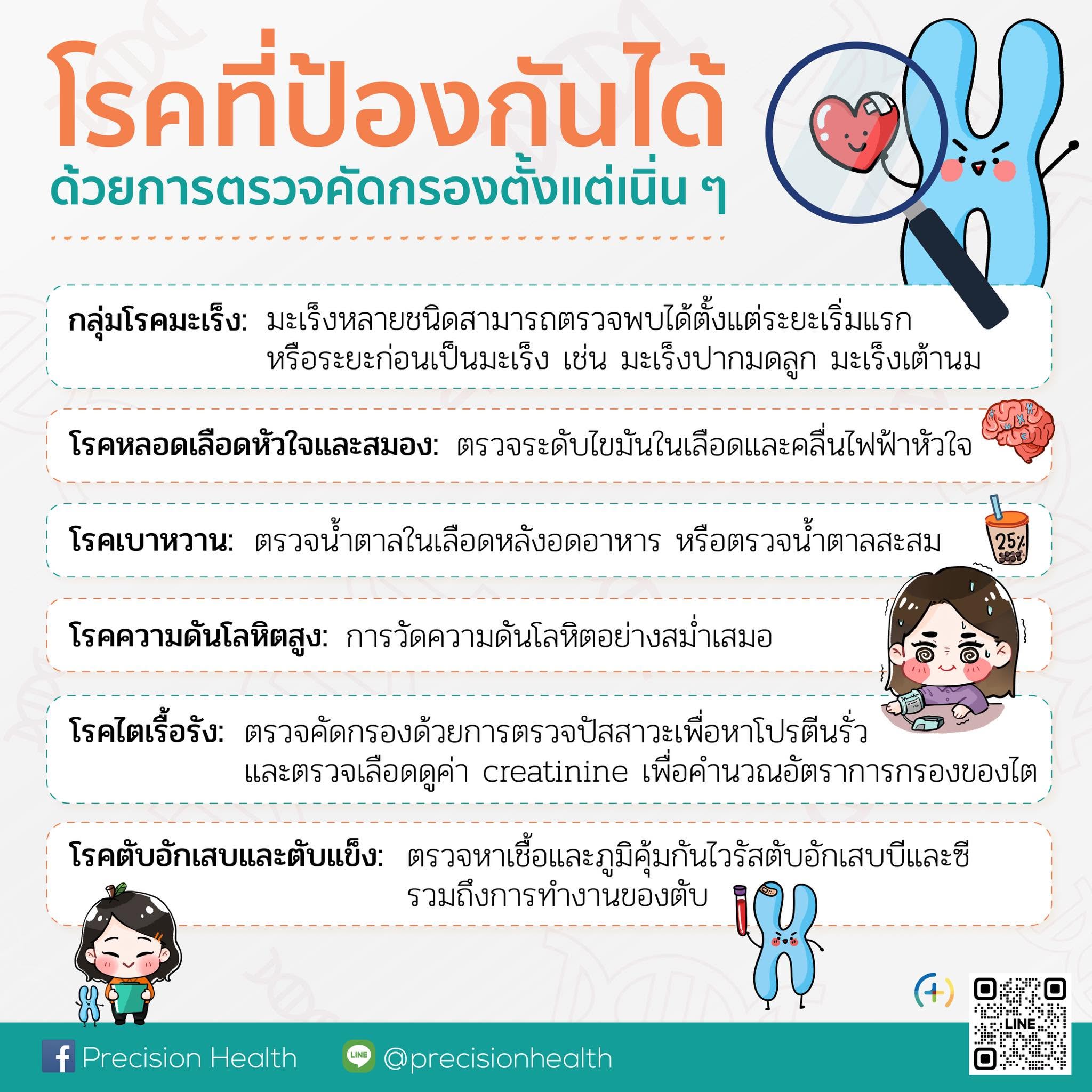
Diseases That Can Be Prevented Through Early Screening
Many diseases do not show symptoms in their early stages but may gradually affect your health without you realizing it. This is why regular health screening is so important. Screening helps identify risks or abnormalities during the asymptomatic stage, allowing for earlier intervention, easier treatment, reduced disease severity, and a greater chance of cure or long-term disease control.
1. Cancer
Many types of cancer can be detected at an early stage—or even at a pre-cancerous stage—significantly improving survival rates.
- Cervical Cancer
Screening with a Pap Smear combined with an HPV DNA Test can detect human papillomavirus (HPV), the primary cause of cervical cancer, before abnormal cells develop into cancer.
- Breast Cancer
Screening with mammography and breast ultrasound is recommended for women aged 40 years and older, or those with a strong family history of breast cancer.
- Colorectal Cancer
Regular screening through a Fecal Immunochemical Test (FIT) every year or a colonoscopy every 5–10 years is recommended for adults aged 45–50 years and older.
- Liver Cancer
Individuals with chronic hepatitis or liver cirrhosis should undergo upper abdominal ultrasound and alpha-fetoprotein (AFP) blood testing to help detect liver cancer at an early stage.
- Prostate Cancer
A Prostate-Specific Antigen (PSA) blood test may be recommended for men aged 50 years and older or those at high risk.
2. Cardiovascular and Cerebrovascular Diseases
Heart disease and stroke are often silent conditions that develop gradually over many years. Regular health checkups, including lipid profile testing and electrocardiograms (EKG/ECG), can help assess the risk of coronary artery disease and stroke before serious complications occur.
3. Diabetes Mellitus
Many individuals are unaware they have elevated blood sugar levels until complications affect the eyes, kidneys, or nerves. Routine screening with Fasting Blood Sugar (FBS) or Hemoglobin A1c (HbA1c) can identify prediabetes, a stage where lifestyle modifications may reverse the condition and prevent progression to diabetes.
4. Hypertension
High blood pressure often develops without noticeable symptoms but can damage blood vessels throughout the body, increasing the risk of heart disease, stroke, and chronic kidney disease. Regular blood pressure monitoring is one of the simplest yet most effective screening methods.
5. Chronic Kidney Disease (CKD)
Early-stage CKD typically causes no symptoms until more than 50% of kidney function has been lost. Screening through urinalysis (UA) to detect protein leakage and blood tests for serum creatinine and estimated glomerular filtration rate (eGFR) can help identify kidney disease early and slow its progression.
6. Hepatitis and Liver Cirrhosis
Testing for Hepatitis B and Hepatitis C infections (HBsAg and Anti-HCV), along with liver function tests (LFTs), is essential because these infections are major causes of liver cirrhosis and liver cancer, often without obvious symptoms.
7. Genetic Disorders and Family Planning
For couples planning to have children, genetic carrier screening can identify inherited conditions such as thalassemia and many other recessive genetic disorders. Advanced technologies such as Expanded Carrier Screening (ECS) can evaluate hundreds to thousands of genes simultaneously, helping couples understand the risk of passing genetic conditions to their children. This information can support informed reproductive decisions, including In Vitro Fertilization (IVF) combined with Preimplantation Genetic Testing for Monogenic Disorders (PGT-M).
Conclusion
Health screening is not only about detecting disease when symptoms appear—it is a proactive strategy to prevent and manage health problems before they become serious. The earlier a disease is detected, the greater the chances of successful treatment, effective disease control, and maintaining a better quality of life.