Precision Health Co., Ltd.
การคุมอาหารแบบยั่งยืน
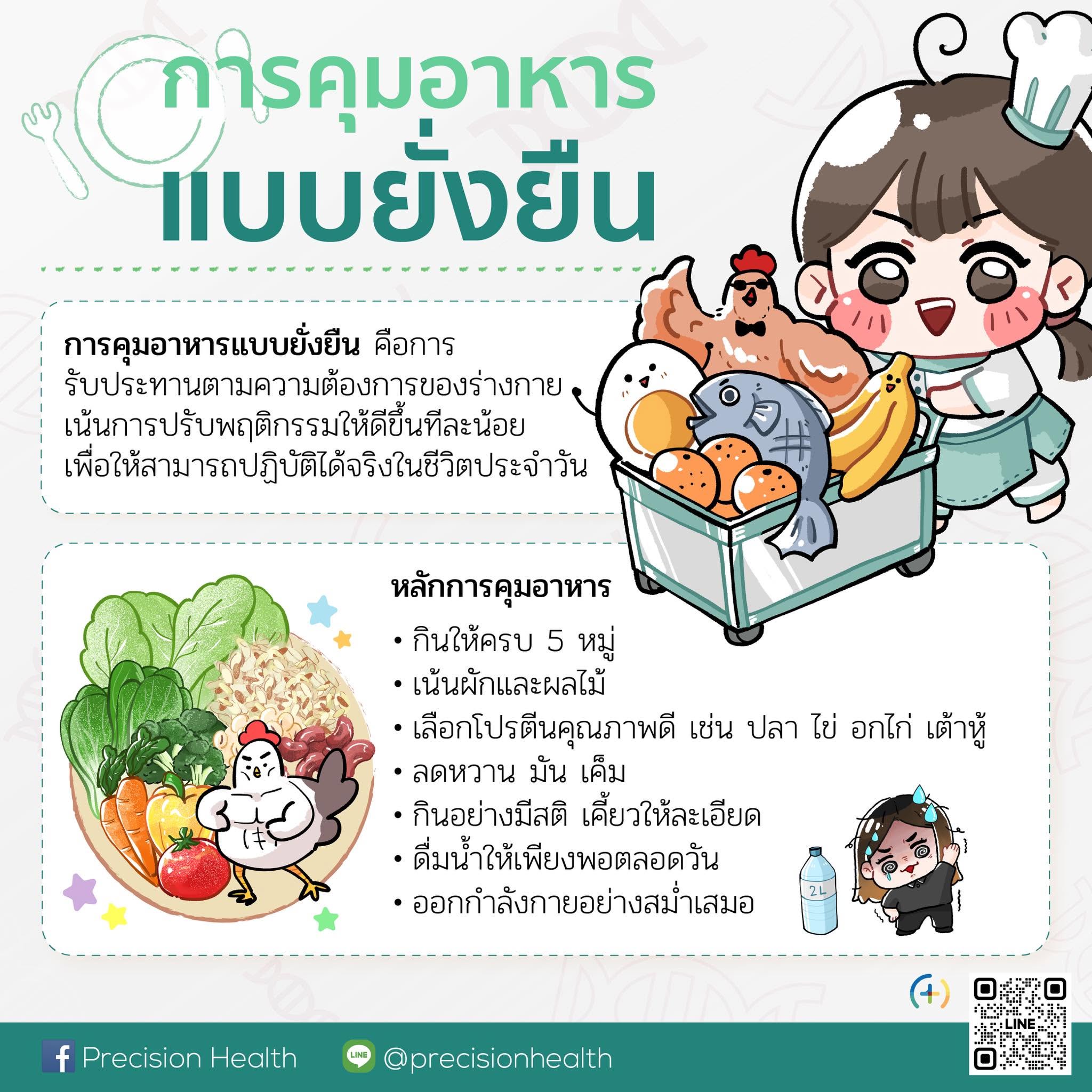
การคุมอาหารแบบยั่งยืน
หลายคนเคยเริ่มต้นคุมอาหารด้วยความตั้งใจ ไม่ว่าจะเป็นการอดมื้อเย็น งดแป้ง งดของหวาน หรือจำกัดอาหารอย่างเข้มงวด แต่เมื่อทำไปสักระยะกลับรู้สึกเหนื่อย หิว ทรมาน และสุดท้ายก็กลับไปกินแบบเดิม จนน้ำหนักกลับมาเพิ่มขึ้นอีกครั้ง
ความจริงแล้ว การคุมอาหารที่ดีไม่จำเป็นต้องเคร่งครัดจนเกินไป เพราะเป้าหมายสำคัญไม่ใช่การลดน้ำหนักให้ได้เร็วที่สุด แต่คือการสร้างพฤติกรรมการกินที่สามารถทำได้อย่างต่อเนื่องในระยะยาว
การคุมอาหารแบบยั่งยืนคืออะไร?
การคุมอาหารแบบยั่งยืน คือการเลือกรับประทานอาหารอย่างสมดุล เหมาะสมกับความต้องการของร่างกาย โดยไม่ต้องอดอาหารหรือห้ามตัวเองจากอาหารที่ชอบทั้งหมด แต่เน้นการปรับพฤติกรรมการกินให้ดีขึ้นทีละน้อย เพื่อให้สามารถปฏิบัติได้จริงในชีวิตประจำวัน
แนวทางนี้ไม่เพียงช่วยควบคุมน้ำหนัก แต่ยังส่งผลดีต่อสุขภาพโดยรวม ทั้งระดับน้ำตาลในเลือด ไขมันในเลือด ระบบหัวใจและหลอดเลือด รวมถึงสุขภาพจิตที่ดีขึ้นจากการไม่กดดันตัวเองมากเกินไป
หลักการคุมอาหารแบบยั่งยืน
1. กินให้ครบ 5 หมู่ ร่างกายต้องการสารอาหารที่หลากหลาย ไม่ควรงดคาร์โบไฮเดรตหรือไขมันทั้งหมด เพราะอาจทำให้ขาดสารอาหารและเหนื่อยง่าย
2. เน้นผักและผลไม้ เพิ่มผักในทุกมื้อ และเลือกผลไม้ที่หลากหลาย ช่วยเพิ่มใยอาหาร ทำให้อิ่มนานขึ้น
3. เลือกโปรตีนคุณภาพดี เช่น ปลา ไข่ อกไก่ เต้าหู้ หรือถั่วต่างๆ เพื่อช่วยรักษามวลกล้ามเนื้อและเพิ่มความอิ่ม
4. ลดหวาน มัน เค็ม ไม่จำเป็นต้องงดทั้งหมด แต่ควรลดปริมาณและความถี่ในการรับประทาน
5. กินอย่างมีสติ (Mindful Eating) กินช้าๆ เคี้ยวให้ละเอียด รับรู้ความอิ่มของร่างกาย และหลีกเลี่ยงการกินเพราะความเครียดหรือความเบื่อ
6. ดื่มน้ำให้เพียงพอ บางครั้งความรู้สึกหิวอาจเกิดจากภาวะขาดน้ำ ควรดื่มน้ำสะอาดให้เพียงพอตลอดวัน
7. ออกกำลังกายควบคู่กัน การเคลื่อนไหวร่างกายอย่างสม่ำเสมอช่วยส่งเสริมสุขภาพและช่วยควบคุมน้ำหนักได้ดียิ่งขึ้น
สิ่งสำคัญที่สุด
การคุมอาหารที่ดีไม่ใช่การทำให้สมบูรณ์แบบทุกวัน แต่คือการเลือกพฤติกรรมที่ดีอย่างสม่ำเสมอ หากมีบางมื้อที่กินมากกว่าปกติ ก็สามารถกลับมาดูแลตัวเองในมื้อต่อไปได้
เพราะการมีสุขภาพที่ดี ไม่ได้เกิดจากการอดอาหารระยะสั้น แต่เกิดจากการดูแลตัวเองอย่างสมดุลและต่อเนื่องในทุกวัน
Sustainable Dieting
Many people begin a diet with strong determination—skipping dinner, cutting out carbohydrates, avoiding sweets, or following highly restrictive eating plans. However, after a while, they often feel tired, hungry, and frustrated, eventually returning to their old eating habits and regaining the weight they lost.
In reality, healthy eating does not need to be overly strict. The most important goal is not to lose weight as quickly as possible, but to develop eating habits that can be maintained over the long term.
What Is Sustainable Dieting?
Sustainable dieting is an approach to eating that focuses on balance and meeting the body's nutritional needs without starving yourself or completely eliminating your favorite foods. Instead, it emphasizes making gradual improvements to eating habits that are realistic and sustainable in everyday life.
This approach not only supports weight management but also promotes overall health, including better blood sugar control, healthier cholesterol levels, improved cardiovascular health, and enhanced mental well-being by reducing the pressure of strict dieting.
Principles of Sustainable Dieting
1. Eat a Balanced Diet: The body requires a variety of nutrients from all food groups. Avoid completely eliminating carbohydrates or fats, as doing so may lead to nutrient deficiencies and low energy levels.
2. Increase Fruits and Vegetables: Include vegetables in every meal and enjoy a variety of fruits. Their fiber content helps you feel fuller for longer and supports digestive health.
3. Choose High-Quality Protein: Good sources of protein include fish, eggs, chicken breast, tofu, and legumes. Protein helps preserve muscle mass and promotes satiety.
4. Reduce Sugar, Fat, and Sodium: There is no need to eliminate them entirely, but reducing the amount and frequency of consumption can significantly benefit your health.
5. Practice Mindful Eating: Eat slowly, chew thoroughly, and pay attention to your body's hunger and fullness cues. Avoid eating out of stress, boredom, or emotional triggers.
6. Stay Hydrated: Sometimes thirst can be mistaken for hunger. Drinking enough water throughout the day helps support overall health and appetite regulation.
7. Exercise Regularly: Regular physical activity complements healthy eating habits, improves overall well-being, and supports effective weight management.
The Most Important Thing
Healthy eating is not about being perfect every day. It is about consistently making better choices over time. If you occasionally eat more than planned, simply return to your healthy habits at the next meal.
Good health is not achieved through short-term food restriction. It comes from taking care of yourself with balance, consistency, and sustainable habits every day.