Precision Health Co., Ltd.
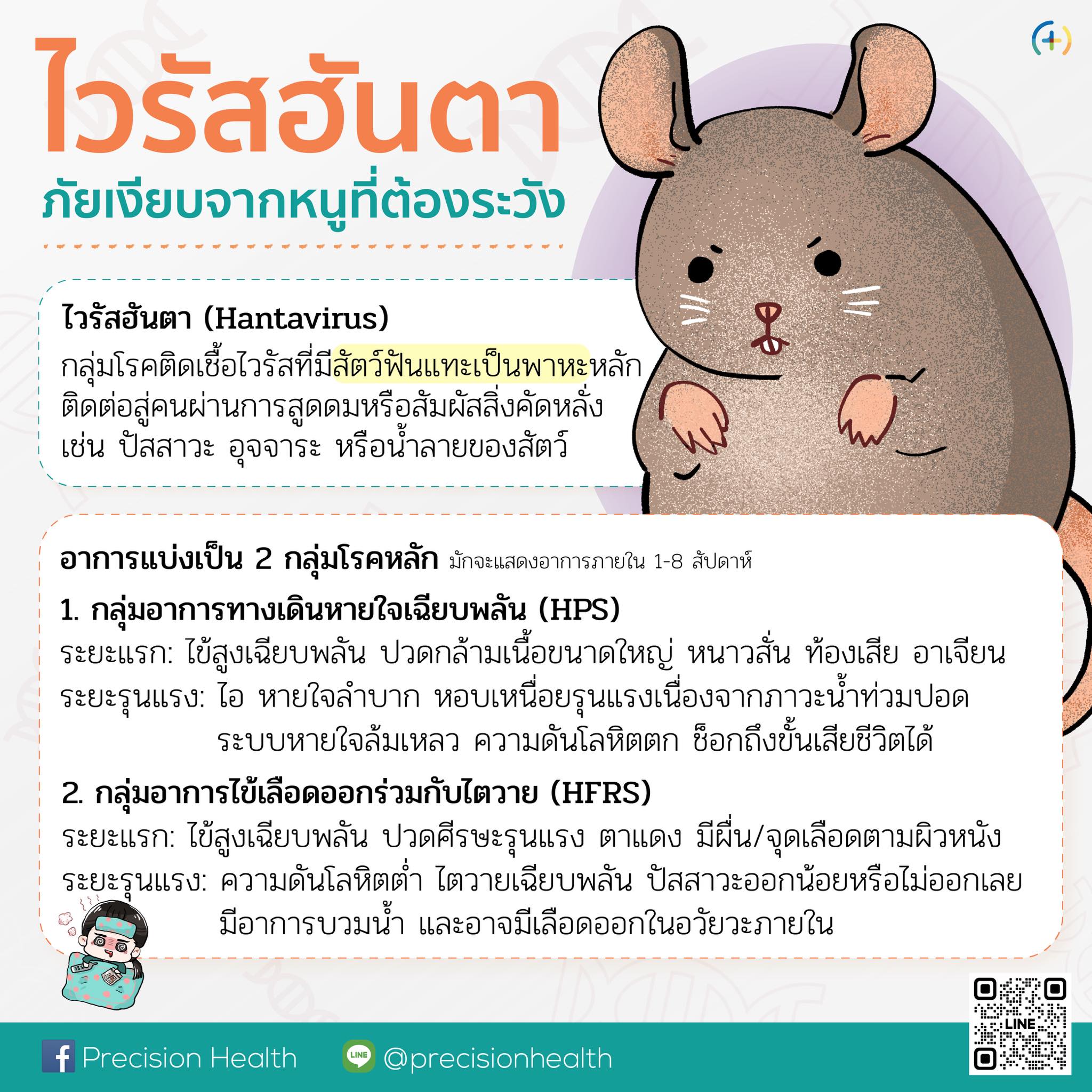
ไวรัสฮันตา (Hantavirus) ภัยเงียบจากหนูที่ต้องระวัง
ไวรัสฮันตา (Hantavirus) คือ กลุ่มโรคติดเชื้อไวรัสที่มีสัตว์ฟันแทะ โดยเฉพาะหนู เป็นพาหะนำโรคหลัก สามารถติดต่อสู่คนผ่านการสูดดมหรือสัมผัสสิ่งคัดหลั่ง เช่น ปัสสาวะ อุจจาระ หรือน้ำลายของสัตว์ที่มีเชื้อ
โรคนี้พบได้ในหลายประเทศทั่วโลก มักพบในกลุ่มผู้ใช้แรงงาน เกษตรกร หรือผู้ที่ทำงานในป่า โดยความรุนแรงของโรคจะขึ้นอยู่กับสายพันธุ์ของไวรัส ซึ่งสามารถก่อให้เกิดโรคสำคัญ 2 กลุ่มอาการ คือ โรคทางเดินหายใจ และโรคไข้เลือดออกร่วมกับกลุ่มอาการไต
ไวรัสฮันตาติดต่อได้อย่างไร?
1. การสูดดม (ช่องทางหลัก): สูดดมฝุ่น ละออง หรืออากาศที่ปนเปื้อนปัสสาวะ อุจจาระ หรือน้ำลายของหนูที่มีเชื้อ
2. การสัมผัสโดยตรง: สัมผัสสิ่งของ พื้นผิว หรือมูลหนูที่มีเชื้อ แล้วนำมือมาขยี้ตา จับจมูก หรือเข้าปาก
3. การกิน:รับประทานอาหารหรือดื่มน้ำที่ปนเปื้อนสิ่งคัดหลั่งของหนู
4. การถูกกัด: ถูกหนูที่มีเชื้อกัด (พบได้น้อยมาก)
หมายเหตุ: โดยทั่วไปไวรัสฮันตาไม่แพร่กระจายจากคนสู่คน (ยกเว้นสายพันธุ์แอนเดส (Andes virus) ในแถบอเมริกาใต้ที่พบรายงานการติดต่อระหว่างคนได้น้อยมาก)
พื้นที่เสี่ยงที่ควรระวัง
- ห้องเก็บของ โกดัง หรือโรงนา
- บ้านพักตากอากาศ อาคาร หรือห้องพักที่ถูกปิดตายไว้นานๆ
- พื้นที่ที่มีฝุ่นสะสม หนาทึบ อับอากาศ และมีร่องรอยมูลหนู
- พื้นที่เกษตรกรรม หรือแคมป์ปิ้งในป่า
อาการของโรค
แบ่งเป็น 2 กลุ่มโรคหลัก
หากได้รับเชื้อ ส่วนใหญ่จะแสดงอาการภายใน 1-8 สัปดาห์ โดยแบ่งตามระบบอวัยวะที่ถูกทำลาย ดังนี้:
1. กลุ่มอาการทางเดินหายใจเฉียบพลัน (Hantavirus Pulmonary Syndrome: HPS) มักพบในแถบอเมริกา
ระยะแรก: มีไข้สูงเฉียบพลัน ปวดเมื่อยกล้ามเนื้อขนาดใหญ่ (เช่น ต้นขา หลัง ไหล่) อ่อนเพลีย หนาวสั่น ปวดศีรษะ ท้องเสีย หรืออาเจียน
ระยะรุนแรง: ไอ หายใจลำบาก หอบเหนื่อยอย่างรุนแรง เนื่องจากเกิดภาวะน้ำท่วมปอด (ปอดอักเสบ) ส่งผลให้ระบบหายใจล้มเหลว ความดันโลหิตตก และช็อกถึงขั้นเสียชีวิตได้
2. กลุ่มอาการไข้เลือดออกร่วมกับไตวาย (Hemorrhagic Fever with Renal Syndrome: HFRS) มักพบในแถบเอเชียและยุโรป
ระยะแรก: ไข้สูงเฉียบพลัน ปวดศีรษะรุนแรง ตาแดง มีผื่นหรือจุดเลือดออกตามผิวหนัง ปวดหลังและปวดท้อง
ระยะรุนแรง: ความดันโลหิตต่ำ ไตวายเฉียบพลัน ปัสสาวะออกน้อยหรือไม่ ออกเลย มีอาการบวมน้ำ และอาจมีเลือดออกในอวัยวะภายใน
วิธีป้องกันตนเอง
1. การทำความสะอาดพื้นที่เสี่ยงอย่างถูกวิธี: ห้ามกวาดหรือดูดฝุ่นแห้งในพื้นที่ที่มีมูลหนูเด็ดขาด เพราะจะทำให้เชื้อฟุ้งกระจายในอากาศ ควรฉีดพ่นน้ำยาฆ่าเชื้อ น้ำยาฟอกขาวเจือจาง หรือน้ำสบู่ให้ทั่วก่อน แล้วใช้ผ้าชุบน้ำเช็ดออกแทน
2. สวมใส่อุปกรณ์ป้องกัน: สวมหน้ากากอนามัย (หากเป็นไปได้ควรใช้ชนิด N95) และสวมถุงมือยางทุกครั้งที่ทำความสะอาดพื้นที่อับหรือจัดการกับมูลหนู
3. การจัดการสิ่งแวดล้อม: ปิดภาชนะเก็บอาหารให้มิดชิด ถังขยะต้องมีฝาปิด เพื่อไม่ให้เป็นแหล่งอาหารของหนู และอุดปิดช่องว่าง/รอยแตกตามอาคารบ้านเรือนเพื่อป้องกันหนูเข้ามาอาศัย
4. ล้างมือบ่อยๆ: ล้างมือด้วยน้ำและสบู่ หรือเจลแอลกอฮอล์ทันทีหลังทำความสะอาดหรือจับสิ่งของในพื้นที่เสี่ยง
ข้อควรระวัง: ปัจจุบันโรคนี้ยังไม่มีรักษาจำเพาะ (ไม่มีต้านไวรัสโดยตรง) และไม่มีวัคซีนป้องกันในวงกว้าง การรักษาจึงเป็นการประคับประคองอาการตามความรุนแรง ดังนั้น หากมีอาการไข้สูง ปวดเมื่อยตามตัว หรือเริ่มมีอาการเหนื่อยหอบ หลังเข้าไปในพื้นที่เสี่ยงหรือสัมผัสมูลหนู ควรรีบพบแพทย์ทันที พร้อมแจ้งประวัติการสัมผัสหนูหรือพื้นที่เสี่ยงให้แพทย์ทราบ
Hantavirus: A Silent Threat from Rodents You Should Be Aware Of
Hantavirus is a group of viral infections carried mainly by rodents, especially rats and mice. Humans can become infected through inhalation or contact with contaminated rodent urine, droppings, or saliva.
This disease has been reported in many countries worldwide and is commonly associated with farmers, laborers, campers, or people working in forests and rural areas. The severity of the illness depends on the virus strain and can lead to two major syndromes: respiratory disease and hemorrhagic fever with kidney involvement.
How is Hantavirus Transmitted?
1. Inhalation (Main Route)
Breathing in dust, aerosols, or air contaminated with urine, feces, or saliva from infected rodents.
2. Direct Contact
Touching contaminated surfaces, objects, or rodent droppings and then touching the eyes, nose, or mouth.
3. Ingestion
Consuming food or water contaminated with rodent secretions.
4. Rodent Bites
Being bitten by an infected rodent (very rare).
Note: In general, hantavirus does not spread from person to person. However, rare human-to-human transmission has been reported with the Andes virus strain in South America.
High-Risk Areas
- Storage rooms, warehouses, barns, or sheds
- Vacation homes, cabins, or buildings left closed for long periods
- Dusty, poorly ventilated areas with signs of rodent infestation
- Agricultural areas or forest camping sites
Symptoms of Hantavirus Infection
Symptoms usually appear within 1–8 weeks after exposure and are classified into two main syndromes depending on the organs affected.
1. Hantavirus Pulmonary Syndrome (HPS)
Commonly found in the Americas.
Early symptoms:
- Sudden high fever
- Severe muscle aches (especially thighs, back, and shoulders)
- Fatigue and chills
- Headache
- Nausea, vomiting, or diarrhea
Severe symptoms:
- Cough and difficulty breathing
- Severe shortness of breath due to fluid accumulation in the lungs (pulmonary edema/pneumonia)
- Respiratory failure
- Low blood pressure and shock, which can be fatal
2. Hemorrhagic Fever with Renal Syndrome (HFRS)
More commonly found in Asia and Europe.
Early symptoms:
- Sudden high fever
- Severe headache
- Red eyes
- Skin rash or small bleeding spots under the skin
- Back pain and abdominal pain
Severe symptoms:
- Low blood pressure
- Acute kidney failure
- Reduced or absent urine output
- Swelling (edema)
- Internal bleeding in severe cases
Prevention Tips
1. Proper Cleaning of Risk Areas
Avoid sweeping or vacuuming dry rodent droppings, as this may spread the virus into the air. Instead, spray the area with disinfectant, diluted bleach, or soapy water first, then wipe it clean with a damp cloth.
2. Wear Protective Equipment
Always wear gloves and a face mask (preferably an N95 mask) when cleaning enclosed or rodent-infested areas.
3. Environmental Control
- Store food in tightly sealed containers
- Keep trash bins covered
- Seal holes and cracks in buildings to prevent rodents from entering
4. Wash Hands Frequently
Wash hands thoroughly with soap and water or use alcohol-based hand sanitizer after cleaning or handling potentially contaminated materials.
Important Note:
Currently, there is no specific antiviral treatment or widely available vaccine for hantavirus infection. Treatment mainly focuses on supportive care according to symptom severity.
If you develop high fever, muscle aches, or shortness of breath after exposure to rodents or high-risk areas, seek medical attention immediately and inform your doctor about any possible rodent exposure.