Precision Health Co., Ltd.
สาเหตุของภาวะน้ำหนักเกินและโรคอ้วน
สาเหตุของภาวะน้ำหนักเกินและโรคอ้วน
ภาวะน้ำหนักเกินและโรคอ้วนเกิดจาก “ความไม่สมดุลของพลังงาน” ในร่างกาย โดยเมื่อพลังงานที่ได้รับจากอาหารมากกว่าพลังงานที่ร่างกายใช้ในแต่ละวัน พลังงานส่วนเกินจะถูกสะสมในรูปของไขมัน ทำให้เกิดโรคตามมา เช่น โรคเบาหวาน โรคความดันโลหิตสูง โรคหัวใจและหลอดเลือด เป็นต้น
ปัจจัยที่ส่งผลต่อความไม่สมดุลนี้ ได้แก่
1. พลังงานเกินความต้องการ (Energy Imbalance)
- รับประทานอาหารมากกว่าที่ร่างกายใช้
- อาหารพลังงานสูง เช่น ของทอด น้ำตาล เครื่องดื่มหวาน
- กินจุกจิก หรือกินตามอารมณ์ (emotional eating)
2. พฤติกรรมการใช้ชีวิต (Lifestyle)
- ขาดการออกกำลังกาย / นั่งนาน (Sedentary lifestyle)
- นอนน้อย หรือนอนผิดเวลา กระทบฮอร์โมนความหิว (Ghrelin / Leptin)
- ความเครียดสะสม ทำให้กินมากขึ้นโดยไม่รู้ตัว
3. ปัจจัยทางชีวภาพและพันธุกรรม
- พันธุกรรมมีผลต่อการเผาผลาญและการสะสมไขมัน
- ฮอร์โมนผิดปกติ เช่น ไทรอยด์ต่ำ หรือภาวะดื้ออินซูลิน
- อายุเพิ่มขึ้น การเผาผลาญลดลง
4. ยาและภาวะทางการแพทย์
- ยาบางชนิด เช่น
- สเตียรอยด์
- ยาต้านซึมเศร้า
- ยาคุมกำเนิดบางชนิด
- โรคบางอย่าง เช่น
- ภาวะที่ร่างกายมีระดับฮอร์โมนคอร์ติซอล (Cortisol) สูงเกินปกติเป็นเวลานาน (Cushing’s syndrome)
- ภาวะพร่องฮอร์โมนไทรอยด์ (Hypothyroidism)
5. สิ่งแวดล้อมและสังคม
- เข้าถึงอาหาร Fast Food ง่าย ราคาถูก
- งานที่ต้องนั่งนาน
- ไม่มีพื้นที่ออกกำลังกาย
- วัฒนธรรมการกิน (เช่น กินดึก กินสังสรรค์บ่อย)
6. ปัจจัยทางจิตใจ
- กินเพราะเครียด เหงา หรือเบื่อ
- ความผิดปกติของการกิน เช่น โรคกินไม่หยุด (Binge Eating)
ภาวะน้ำหนักเกินและโรคอ้วนไม่ได้เกิดจากสาเหตุใดสาเหตุหนึ่ง แต่เป็นผลจากหลายปัจจัยร่วมกัน ดังนั้นการดูแลน้ำหนักจึงควรปรับทั้งพฤติกรรมการกิน การออกกำลังกาย และการปรับสมดุลระหว่างพลังงานที่ได้รับและพลังงานที่ใช้ในชีวิตประจำวัน เพื่อส่งเสริมสุขภาพที่ดีและลดความเสี่ยงต่อโรคเรื้อรังในระยะยาว
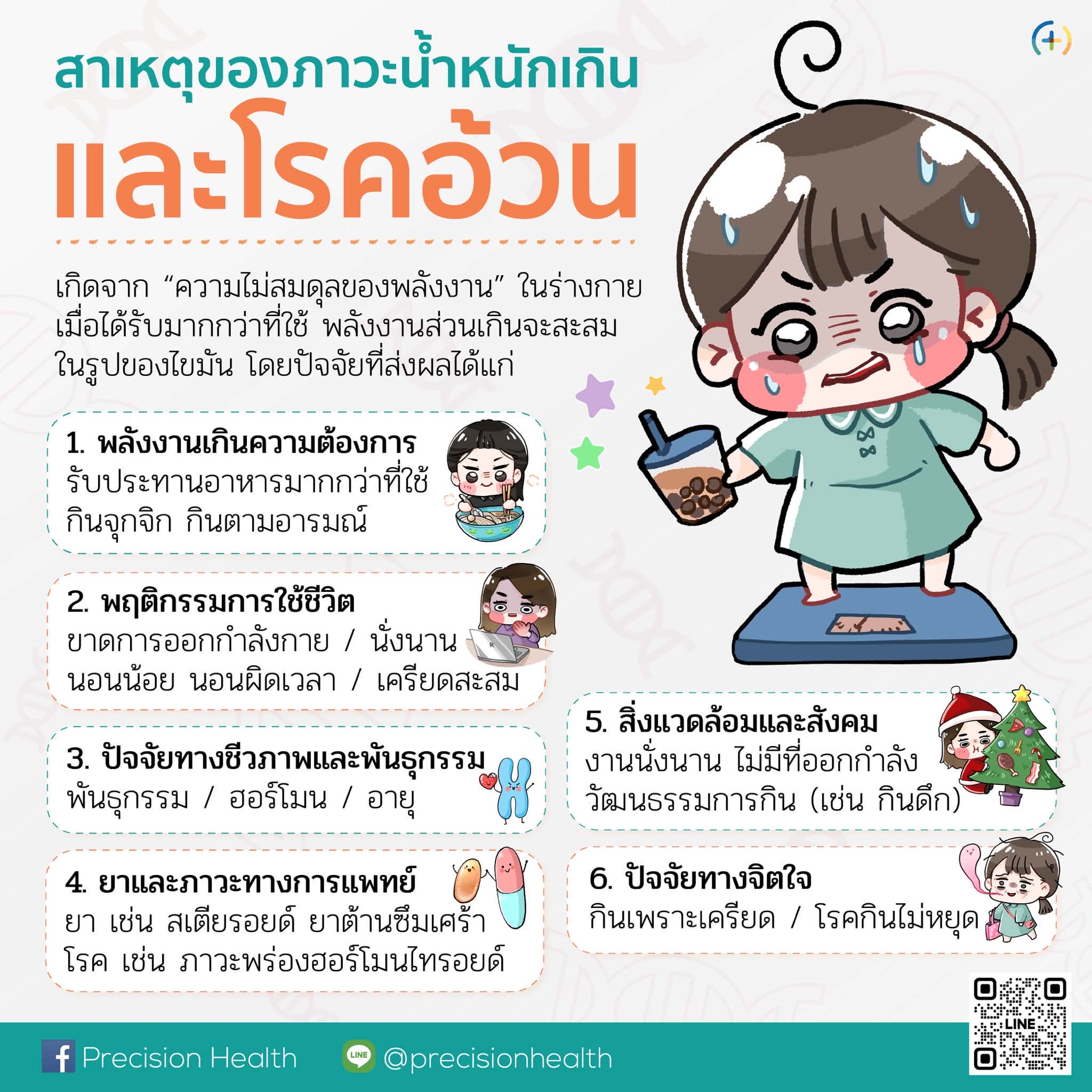
Causes of Overweight and Obesity
Overweight and obesity are primarily caused by an energy imbalance in the body. When the energy intake from food exceeds the energy the body uses each day, the excess energy is stored as fat. Over time, this can lead to health conditions such as diabetes, hypertension, and cardiovascular diseases.
Key contributing factors include:
1. Excess Energy Intake (Energy Imbalance)
- Consuming more calories than the body needs
- High-energy foods such as fried foods, sugar, and sweetened beverages
- Frequent snacking or emotional eating
2. Lifestyle Factors
- Lack of physical activity or prolonged sitting (sedentary lifestyle)
- Inadequate or irregular sleep, affecting hunger hormones (ghrelin and leptin)
- Chronic stress leading to increased food intake
3. Biological and Genetic Factors
- Genetics influencing metabolism and fat storage
- Hormonal imbalances, such as hypothyroidism or insulin resistance
- Aging, which reduces metabolic rate
4. Medications and Medical Conditions
- Certain medications, such as:
- Steroids
- Antidepressants
- Some contraceptives
- Medical conditions, including:
- Cushing’s syndrome (prolonged high cortisol levels)
- Hypothyroidism
5. Environmental and Social Factors
- Easy access to fast food at low cost
- Jobs requiring prolonged sitting
- Limited access to exercise spaces
- Cultural eating habits (e.g., late-night eating, frequent social dining)
6. Psychological Factors
- Eating due to stress, loneliness, or boredom
- Eating disorders, such as binge eating disorder
Overweight and obesity do not result from a single cause but from a combination of multiple factors. Therefore, effective weight management requires a holistic approach, including dietary changes, increased physical activity, and maintaining a balance between energy intake and expenditure to promote long-term health and reduce the risk of chronic diseases.
By adminph
Posted 2026-05-14 00:00:00